
Fly Fishing Insider Podcast
Alaska is not western dry fly fishing. The largest rainbows there are caught on streamers, rarely on nymphs and essentially never on a dry. Early June through summer is a streamer and swing game around boulders; once salmon begin spawning in midsummer, egg patterns and beads take over, followed by flesh.
James Johnson runs Nac-Nac Camp and Katmai Trophy Lodge in Alaska, has spent every summer there since he was 12, and fishes destinations from New Zealand to Cuba the rest of the year.
Also on Apple Podcasts · Spotify · YouTube
Is Alaska really a dry fly destination?
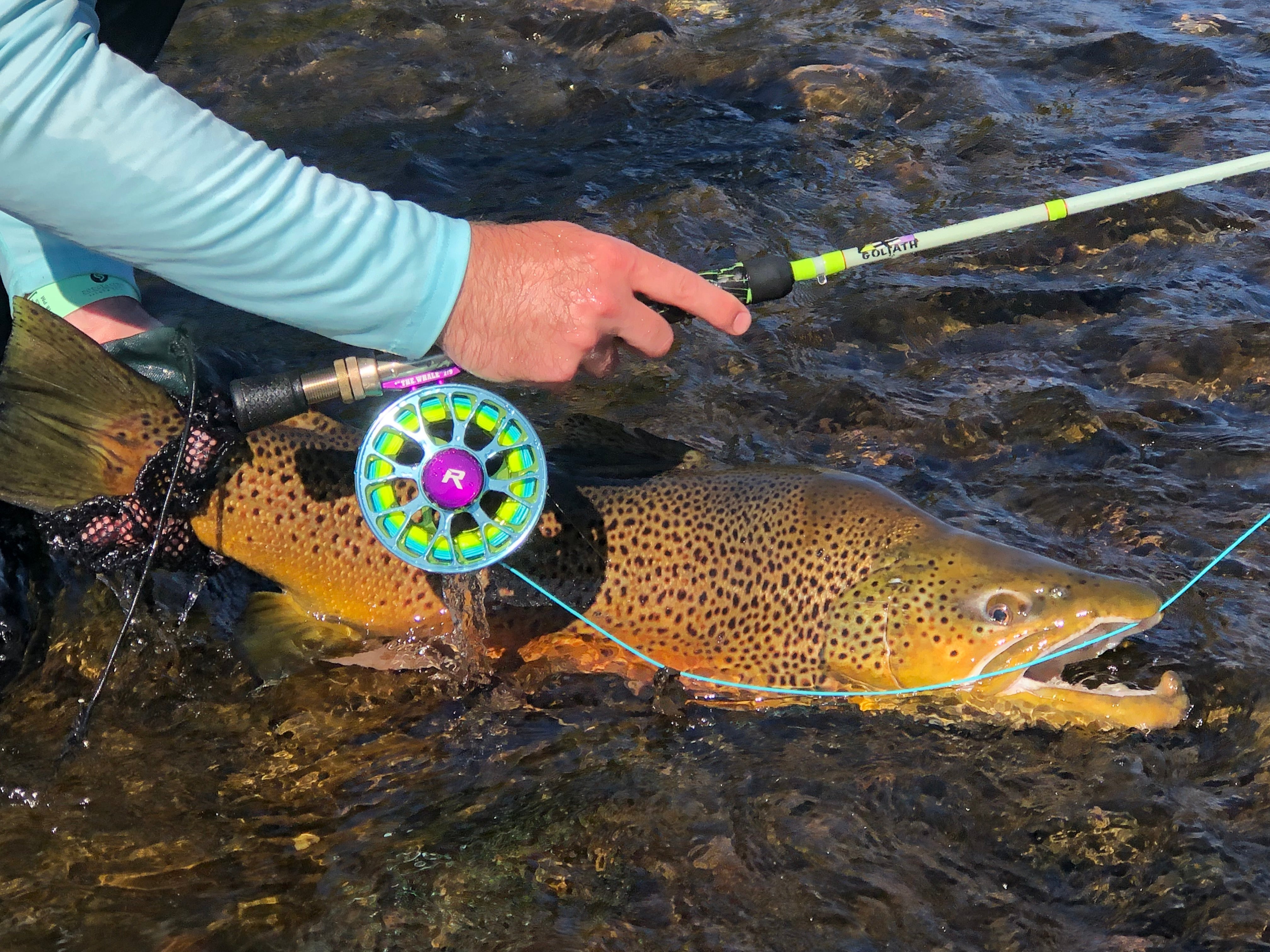
No, and the images that sell Alaska trips mislead anglers on this point. The 30-inch rainbows people picture themselves catching on a dry fly are almost never caught on one, and only rarely on a nymph; at that size the fish are carnivorous and the game is streamers. Anglers who arrive expecting pre-runoff and post-runoff hatch cycles like a western river are working from the wrong model, because Alaska's large lakes drive the fishery instead of a snowmelt hydrograph.
What order do the Alaska salmon runs come in?
King salmon come first, followed by sockeye, then chum and pink, with silvers running last into the fall. Once the earlier salmon hit the river and spawn, around the middle of summer, egg patterns and beads become the productive approach behind spawning fish. Flesh fishing comes later still, when salmon begin to die off, and it is most worthwhile on rivers holding heavy numbers of fish or heavy numbers of bears working them.
Why do Alaska's biggest rainbows show up in the rivers in fall?
The big rainbows in this part of Alaska are lake-run, not sea-run, and they bounce between lake and river through their life cycle rather than making one long ocean migration. They are in the river for the spring spawn and again in the fall to feed before ice-up, which is why September holds so many large fish. Unlike steelhead, which spend roughly three years in the ocean before returning, these rainbows stay in the freshwater system. The nearby bay is cold, shallow, muddy and full of predators, so it is poor habitat for outmigrating juveniles, and the fish that do drop down get back into the river quickly.
What lines and rods do you need for Alaska rivers?
Line choice tracks river size. On a stream 30 feet wide a floating line covers the water, while the larger rivers call for sink tips to get weighted flies down. Stripping streamers for kings is done on eight and nine weights, and the strip-and-swing approach is closer to musky fishing than to trout fishing: the same retrieve that brings in an 18-inch trout can hook a 20 to 30 pound king. Fly-out days on small wilderness streams are lighter work, in the five to six weight range.
How much does physical fitness matter on an Alaska fly fishing trip?
More than most guests expect. Anglers in their sixties and seventies routinely arrive wanting to hike into a wilderness stream, wade around and catch fish, then struggle with the walking itself. A little walking and cardio before the trip plus some strength work with a stability component measurably raises the quality of the days on the water. It is possible to fish comfortably from a boat with a seat and a knee brace, but fly-outs, wading big water and mousing all require the ability to cover ground on foot.
Why does an Alaska lodge need good water at its doorstep?
Alaska weather decides whether float planes fly, and some weeks yield only a day or two of safe flying. That is why the standing advice is to take the first fly-out offered rather than saving it for later in the week. A lodge with a strong home river and productive tributaries means a weathered-out day is still a fishing day, with beads, swung flies or a different species available on the same water. A camp positioned to add fifteen or twenty fly-out destinations on top of that home water covers both cases.
What does keeping moving actually mean when you are fly fishing?
Moving does not mean driving to a new river. It means covering water in small increments: make a cast, and if it does not produce, step three or four feet and cast again. In clear water, cover ground until you actually see fish, whether that means rising trout, spotted fish or spawning salmon, and then fish those. In water where you cannot see fish, fish the inside of a run, then the middle, then the outside, then work down it, and treat that systematic coverage as movement. Working down a run also rests the water above it, so you can come back up and fish it again with a new depth or tactic.
Key takeaways
- Plan an Alaska trip around streamers, beads and egg patterns; treat a dry fly day as a bonus, not the itinerary.
- Big rainbows are in the river in spring to spawn and again in fall to feed before ice-up, so September concentrates large fish.
- Take the first fly-out the lodge offers, because weather may not allow another one that week.
- Bring an eight or nine weight for stripping streamers to kings, and a five or six weight for fly-out wilderness streams.
- Do some walking, cardio and stability-focused strength work before the trip; hiking and wading are the limiting factor for most guests.
- If a spot does not produce in two or three drifts, move three or four feet rather than repeating the same cast.