
On a lake, imitate when trout are feeding steadily on something you can see or sample, and provoke when they are present but indifferent or locked onto something too small to copy. Change the retrieve when you change category: a static hang for an imitation, a fast strip for an attractor.
Here's the situation every lake angler eventually hits. The depth is right, the retrieve is right, fish are showing on the sounder and rolling on the surface — and the perfect imitation of what they're eating gets ignored all afternoon. Then someone in the next boat catches five in an hour on a fly that looks like a fluorescent gumdrop.
That is not bad luck. It's the central puzzle of stillwater fly selection: trout in lakes eat for more than one reason, and only one of those reasons is hunger for the thing you're imitating. Once you understand the other reasons, the gumdrop stops being an insult to your entomology and becomes a tool.
Why Your River Instincts Fail Here
Match the hatch is a river doctrine, and on a river it's close to a law. Current delivers a narrow band of drifting food past a fish holding in one place; the trout compares what arrives against what it's been eating and rejects the outlier. Getting size and silhouette right is most of the battle.
A lake breaks that in two ways. First, the bug cast is different — chironomids, damsels, dragons, scuds, boatmen and Callibaetis instead of the mayfly-and-stonefly drift you know, with chironomids being the single most important food in most stillwaters. Stoneflies are essentially absent.
Second, and more disruptively, the fish is moving and hunting rather than sitting and filtering. A cruising predator makes decisions a holding fish never has to: it investigates, it chases things out of its space, it grabs objects it isn't sure about. Curiosity, territoriality and plain aggression are all live options in a lake, and none of them require your fly to look like food.
Depth First
Depth
Pattern choice still comes after depth, and the depth tells you which fly is even plausible. A pupa imitation hung within a foot or two of the bottom in 10–18 ft is a different proposition from an attractor pulled through the top of the water column, and neither works in the other's band.
Pattern
Now make the actual decision — imitate or provoke. Imitate when you can see or sample what they're on and the fish are feeding steadily on it. Provoke when they're present and uninterested, when they're locked on something too small or numerous to copy, or when you need to pull a fish from a distance.
Retrieve
The two choices demand opposite hands. An imitation of an ascending pupa wants a static hang and nothing else. An attractor wants to be moved with intent — a fast strip that makes it shake and flash. Fishing an attractor slowly is the most common way to waste one.
Reading the Lake
Start by finding out what's actually there rather than guessing. Turn rocks and pull weed at the launch. Look at the surface for shucks and adults. If you land a fish, take a quick throat sample — it tells you size and colour in seconds, and size matters more than colour most days.
Chironomids deserve their reputation. They pass through four life stages, and the pupa — the one slowly ascending from the bottom toward the surface — is the stage worth imitating. Stillwater patterns run anywhere from size 18 up to as large as size 6, dramatically bigger than the midges river anglers know. Early in the season they run small, around 16 to 18, and the average size climbs as the year goes on.
Then there's the food you cannot imitate. Daphnia are microscopic zooplankton that drift in dense clouds, and trout feeding on them are eating something you have no hope of tying. This is where a bright fritz fly earns its keep: you match the colour of the cloud rather than any individual organism, and pick from a card of unlikely colours until one gets bitten.

Step-by-Step On the Water
- Sample before you guessRocks, weed, surface, spider webs on the launch structure. A small aquarium net costs nothing and answers size and colour better than any chart.
- Start imitative if the evidence is thereSteady rises, visible pupae, a throat sample full of one thing — fish the copy first, at the right depth, on a hang.
- Get the size right before the colourA pupa two sizes too big is refused more often than one a shade off. Carry the same pattern in three sizes rather than five colours in one size.
- Give it a fair block of timeRight depth, right pace, confident pattern, ten to fifteen minutes. If they're around and in the mood, that's usually long enough.
- Switch to provoking, not to another imitationWhen the copy fails, most anglers try a slightly different copy. Change category instead — go loud, go bigger, and change the retrieve to match.
- Work the colour cardOn attractors, colour is the variable that actually moves the needle, and it shifts with water clarity and cloud. Cycle deliberately rather than staying loyal.
- Try the deliberate wrong sizeWhen they're locked on tiny naturals, a much larger version of roughly the same thing sometimes triggers a grab out of pure greed. It shouldn't work. It regularly does.
- Move a static fly onceIf a hanging fly has been ignored, give it a single one-foot lift and let it settle. That rise-and-fall is often the whole trigger.
The Conditions Dial
Chop scatters light and forgives a gaudy fly, so attractors fish well in a breeze. Flat calm and clear is when imitation earns its money — the fish get a long, unhurried look and the loud fly gets refused.
Bright sun makes flash and holographic materials work harder; overcast favours solid, high-contrast silhouettes. Change fly colour before you change fly type when the cloud rolls through.
In clear water, downsize and go subtler. In stained or algal water, go dark and solid so the fly reads as a shape, or go bright so it reads at all — the two failures are being invisible and being obviously fake, and the water tells you which risk you're running.
Emergences concentrate between roughly 50 and 65°F, so that's when imitation is most likely to be the answer. Colder than that and small, static and near the bottom is usually all there is. Past about 61°F at the surface (66°F for browns), think hard about whether to fish.
Common Mistakes
No takes, so the box comes out. It's the most satisfying variable to change and almost never the one that's wrong.
Confirm depth and pace before the pattern. If all three are right and nothing has happened in ten or fifteen minutes, the honest read is that there are no fish there — move the boat rather than the fly.
Size 20 and 22 midges that are perfect on a tailwater, brought to a lake where the pupae are twice that size or more.
Buy stillwater sizes. Carry 14 through 18 as your working range, start small early in the season, and go bigger as the year progresses.
The bright fly goes on, but it gets the same gentle treatment as the chironomid it replaced, and nothing happens.
Move it with intent. Attractors work by triggering chase and aggression, and that needs speed, flash and a fly that shakes when pulled.
The angler who won't tie on a fluorescent fly because it doesn't imitate anything spends daphnia days catching nothing on beautiful copies.
Carry a few loud patterns and use them without guilt. On zooplankton days you're matching the colour of a cloud of tiny animals, which is a legitimate form of matching the hatch.
Six shades of the same pattern in one size, and no way to respond when the naturals are bigger or smaller than expected.
Build the box by size first, then add colours in the sizes that already work. A throat sample settles the argument in seconds.
Author's Story & Key Insights
The story that stuck with me from Phil Rowley's episodes wasn't about a fly he invented. It was about being beaten by one.
He was running a seminar in Manitoba, fishing chironomids with a group. They pumped a fish and found it stuffed with small dark pupae — about as clear a piece of evidence as this sport ever hands you. So they matched it: right size, right colour, right depth. And they limped along, picking up the odd fish, when a stomach full of naturals said they should have been busy all morning.
Then a student who'd been off running an errand rejoined the group, made his first cast and hooked up. Beginner's luck, everyone thought. By his fifth or sixth fish the entire group was watching him. He was fishing a considerably larger, longer chironomid pattern with a big white bead — not remotely what the fish had been eating.
Rowley's reading of it is the thing worth carrying: in that moment the fish weren't selecting, they were choosing the biggest available mouthful. If the whole lake is serving the same small item, a much larger version of it can read as an opportunity rather than an error. He makes the same argument about blobs and boobies, the bright foam-and-fritz flies that came into North America from British competition fishing — they work because trout will put things in their mouths out of curiosity, territoriality and aggression, not only hunger. As he puts it, if a fish puts the fly in its mouth, that's good enough for a fly fisher.
What I took away is that "match the hatch" and "provoke a reaction" aren't rival philosophies. They're two tools, and the skill is knowing which problem you have. Steady feeding on an identifiable insect is an imitation problem. Fish present and indifferent, or locked onto something uncopyable, is a provocation problem. Diagnose before you tie.
Phil Rowley, Parts 1 and 2
Keep a few flies in your box that you're slightly embarrassed by. Every angler I know has a compartment of loud, ridiculous patterns they never tie on because it feels like cheating. Those are the flies that save late-summer afternoons when the fish are grazing on zooplankton and every honest imitation you own is being ignored. You don't have to like them. You just have to fish them.
Terms You'll Hear
- Chironomid
- The lake midge — the most important trout food in most stillwaters, fished mostly as an ascending pupa. British anglers call the pattern a buzzer.
- Bloodworm
- The red or maroon chironomid larva that lives in bottom sediment, before the pupa stage.
- Ascent
- The slow vertical swim of a chironomid pupa from the bottom to the surface — the behaviour a static hang imitates.
- Daphnia
- Microscopic zooplankton drifting in dense clouds. Trout feeding on them can seem impossible to catch, because there's nothing to imitate individually.
- Blob
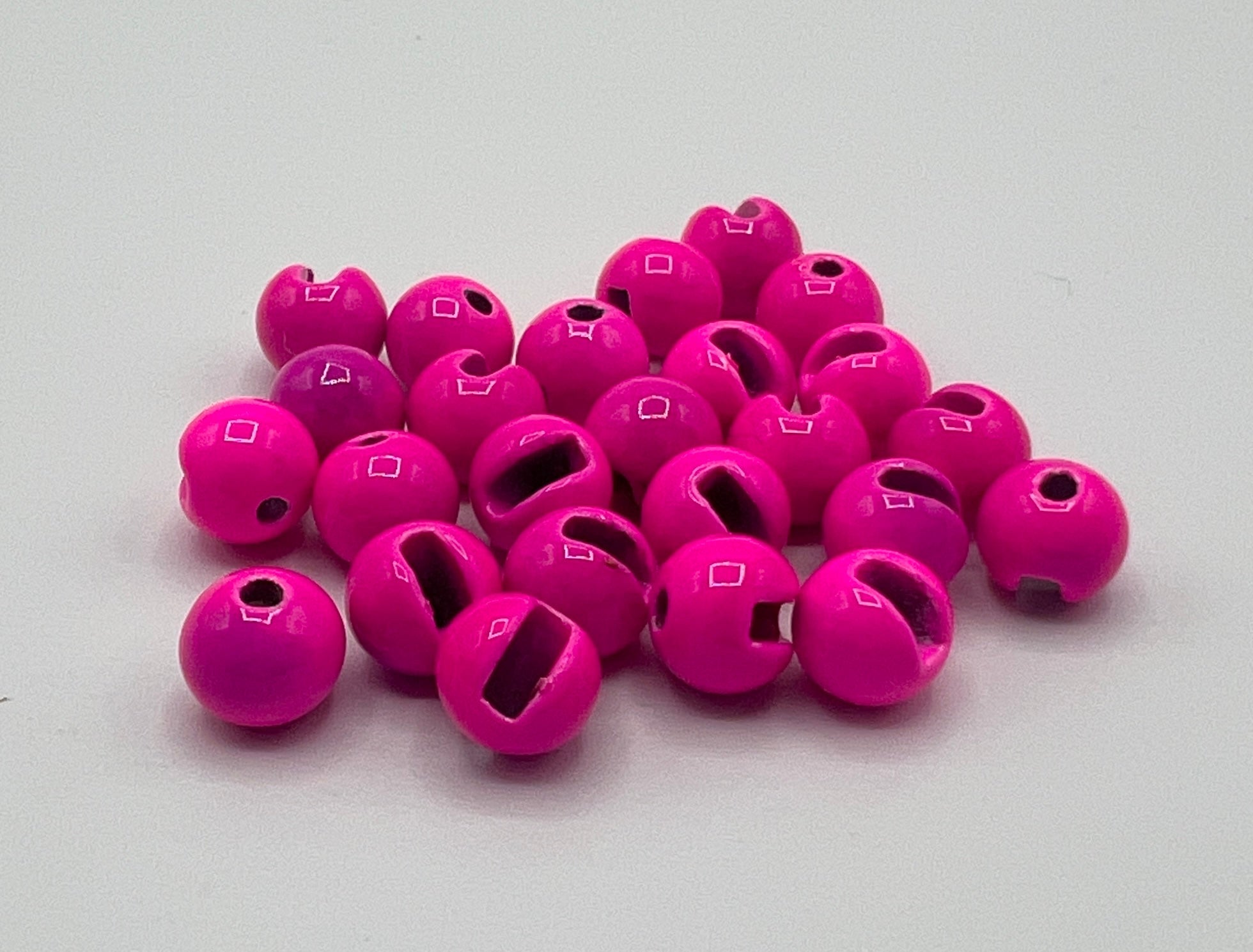
- A bright fluorescent fritz fly imitating a daphnia cloud or simply triggering a reaction. British in origin, now widespread.
- Booby
- A fly with buoyant foam eyes, fished on a fast sinking line so it floats up off the bottom. Also British.
- Attractor
- Any fly designed to provoke a response — curiosity, aggression or territoriality — rather than to imitate a specific food item.
- Throat sample
- A quick look at what a landed fish just ate, taken from the throat rather than by pumping the stomach.
- Callibaetis
- The speckled-dun mayfly of western lakes, with several broods across a summer — the closest thing to a familiar mayfly hatch a lake offers.
Recommended Fly Patterns
The imitation side of the box is well covered below. The provocation side is not — see the note under the gear section.
Recommended Gear
Straight with you: we don't currently stock blobs, boobies or FABs — the fritz-and-foam attractors this article argues for. Until we do, the pink scud above and a fast strip will cover some of that ground, and any fly-tying supplier will sell you fritz in the loud colours. What we can equip properly is the depth side, which is what makes any of these patterns fishable in the first place.
- Part 1Depth Is the First Decision: Finding and Holding the Right Level on a Lake
- Part 2Indicator, Long Leader, or Straight Down: Three Ways to Present a Lake Fly
- Part 3Imitate or Provoke: Choosing a Stillwater Fly When the Fish Won't Match
Go on a fly fishing trip you'll never forget
The water you keep thinking about is bookable. Tell us where you want to go and we'll help you get there. Don't wait.
Book a TripFly Fishing Insider Podcast has a referral partnership with Frontiers International Travel. If you book after being introduced through us, we may receive compensation at no additional cost to you.
Tight lines, everyone!
That's the series: depth, then presentation, then pattern. Work them in that order and a lake stops being a guessing game.