
Ryan hooked the best rainbow of his young fly fishing life on the Lower Provo last June, a thick, silver fish that jumped twice before he could even get his line hand organized. What followed was the longest six minutes of his season. He held the rod straight up over his head, the trout sat in the current below him shaking its head, and every time it turned, Ryan gave it a little more line. When it finally came close, he stabbed at it with the net, the fish bolted, and the 5X tippet parted with a quiet little tick. He looked at me like I'd know how to put it back on the hook.
I didn't, but I did know why it came off. And it had nothing to do with luck. Learning how to fight a trout is one of the most overlooked skills in fly fishing, and it's also one of the easiest to fix, because most lost fish come from the same handful of habits.
The short answer: To fight a trout well, keep steady tension, drop the rod low and to the side to apply side pressure, and pull the fish's head in the opposite direction from where it wants to go. Get the fish on the reel with a light drag, steer it toward calm water, and net it head first. Short fights land more fish and release healthier trout.
Key Takeaways
- A high, vertical rod lifts the trout's head but does little to tire the fish. Low side pressure turns the head and wins the fight faster.
- Set your drag light, just enough to stop the spool from overrunning, and add pressure with your hand or rod angle instead.
- Pick your landing spot before you cast. A fish that reaches heavy current is usually lost.
- Lead the trout to the net, not the net to the trout. Submerge the net and bring the fish in head first.
- Shorter fights mean healthier releases. When water temperatures climb past the high 60s, fish early or fish somewhere colder.
Why Ryan's rainbow came unbuttoned
Let's go back to that fish, because it did three things that almost every beginner does, and I've done all of them myself.
First, the rod was straight up. That's what we're all taught in the first few minutes of fly fishing: "rod tip up!" It's not wrong for the first few seconds after the hook set, because it keeps slack out of the line. But after that, a straight-up rod mostly pulls the fish's head toward the surface. The trout doesn't feel much of a fight from that angle. It just hangs in the current and uses the river's push against you.
Second, Ryan gave line every time the fish turned. That feels like the safe choice, but it lets the trout rest, recover and pick its own direction. The fish was writing the script.
Third, the net lunge. A trout that's still green, meaning it still has plenty of energy, will explode when a net swoops toward it. That last burst is where more trout are lost than anywhere else in the fight, and it's where tippets break, because the angler is usually holding the rod high and tight at that exact moment with no cushion left.
The good news? Every one of those is a habit, and habits can be swapped out. Ryan landed a nicer fish two weeks later on the same stretch in about ninety seconds. Here's how.
How do you fight a trout on a fly rod?
You fight a trout on a fly rod by keeping constant tension on the fish and using the rod's angle to steer its head. The goal isn't to overpower the trout. The goal is to take away its choices. Wherever the fish wants to go, you pull its head the other way, and each time it has to turn, it burns energy it can't recover.
I like to think of it like leading a horse. You don't win by pulling a horse forward by brute strength. You turn its head, and the body follows. A trout works the same way. Control the head, and the rest of the fish comes with it.
The first five seconds
Right after the hook set, clear the slack. Keep the rod tip up for a moment, pinch the line against the grip with your rod-hand finger, and strip in any loose line until the fish is tight. If the trout is small, you can strip it right in by hand. If it's a good fish that takes off running, let the loose line run through your fingers with gentle pressure until it's all out the guides and the fish is on the reel.
Getting the fish on the reel
"On the reel" just means all the loose line is gone and any line the trout takes comes off the spool. For small trout it doesn't matter much. For anything over fourteen or fifteen inches, it matters a lot, because loose line on the water or around your feet is how fish get tangled in rocks and how tippets snap. Once the fish is on the reel, your drag does the work and you can focus on angles.
Should you keep your rod tip high or low when fighting a trout?
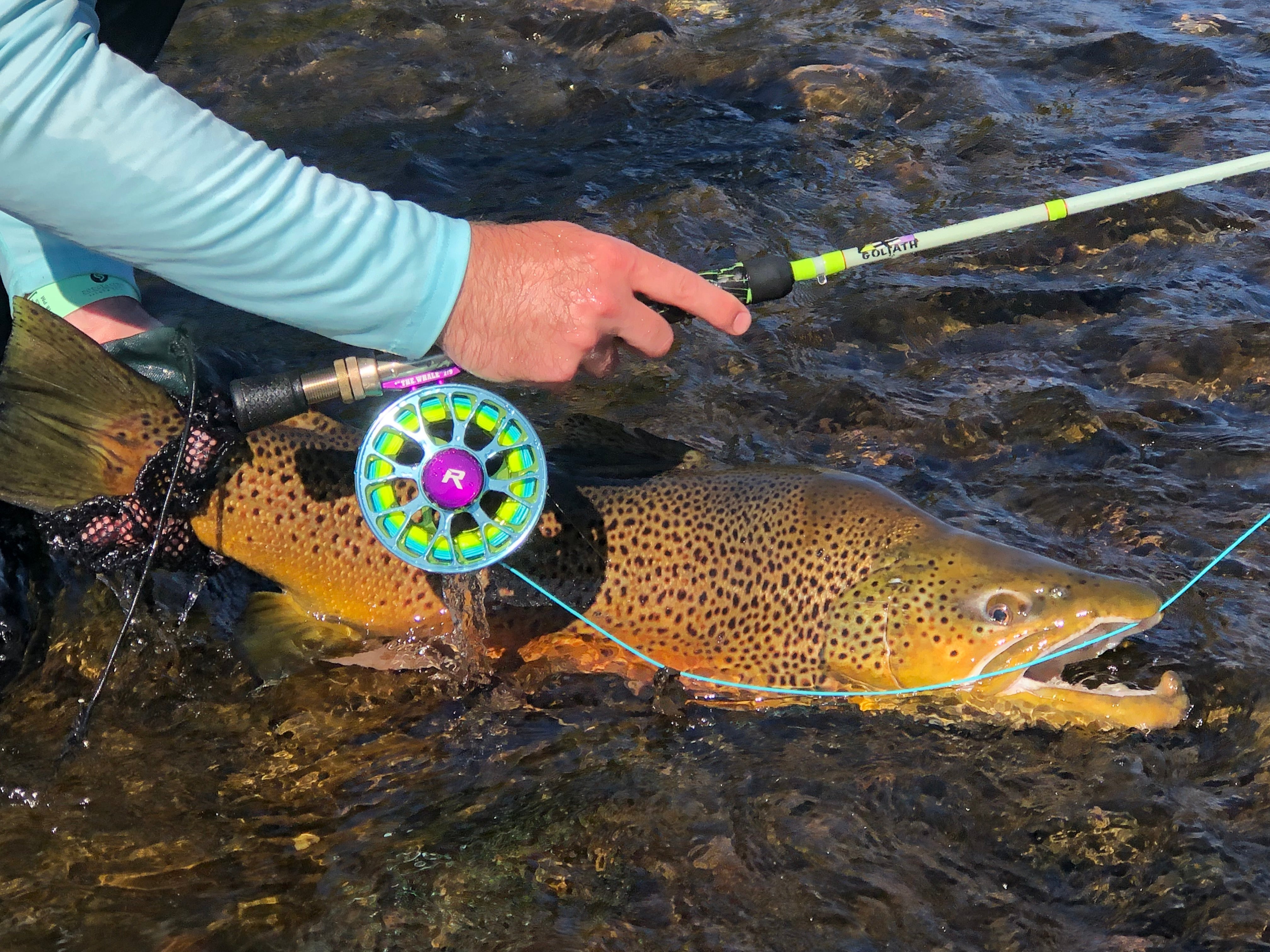
You should keep your rod tip low and to the side for most of a trout fight. A low rod angle applies side pressure, which pulls the fish's head sideways and makes it work much harder than a vertical rod ever will. Save the high rod for keeping line off rocks in pocket water and for the last few feet before netting.
Here's why side pressure works. When the rod is vertical, the pull on the fish comes from above. The fish can just point its nose into the current and hang there, and the river does the work of holding it in place. When you drop the rod low and to one side, the pull comes from the side. Now the fish's head gets turned out of the current every time you apply pressure, and it has to swim to straighten itself out. You're making the river work for you instead of for the trout.
The other benefit is leverage. A rod held low uses more of its butt section, the stiff, powerful part near the grip, instead of just the soft tip. Think of the difference between lifting a bag of groceries with your arm straight out versus with your elbow tucked in. Same bag, much more control when the power comes from close to your body.
Switch sides to steer
Side pressure isn't a single position. It's a steering wheel. If the trout heads left, swing the rod low to the right so you're pulling its head back the other way. When it turns and runs right, switch sides and pull left. Each change of direction costs the fish energy, and after three or four turns, even a strong rainbow starts coming in on your terms. Mike calls this "keeping them off balance," and he's one of the quickest fish-landers I've ever shared a river with.
When a high rod makes sense
There are times to raise the rod. In rocky pocket water, a high rod keeps line from wrapping around boulders. When a fish is right at your feet, lifting the rod brings its head up and toward the net. And if a fish goes airborne, you can lower the rod slightly, sometimes called "bowing to the fish," so a slack moment keeps the tippet from breaking on the landing. But in open water with a hooked trout pulling hard, a low rod is almost always the better call.
How tight should your drag be for trout?
For most trout fishing, your drag should be light: just enough to stop the spool from spinning past the line and creating a bird's nest when a fish runs. A heavy drag on 5X or 6X tippet is a broken tippet waiting to happen. Add extra pressure with your hand or your rod angle, which you can release instantly, instead of with a knob you can't adjust fast enough.
A good way to check it: pull line off the reel by hand with a quick, smooth tug. The spool should give line steadily without spinning on after you stop pulling. If it overruns, tighten a click or two. If you have to yank hard to get line off, loosen it. Once it's set, leave it alone during the fight. Cranking the drag knob while a fish is running is a classic way to lose it.
If you want to add pressure mid-fight, many reels let you palm the rim, meaning you press your palm gently against the edge of the spinning spool. It's like touching the brake on a bike instead of slamming it. If you're curious about how different drag systems work, our Fly Fishing Reels Part 3: Drag Systems breaks it all down.
Here's a quick way to think about pressure by tippet size. These aren't exact numbers, but they're the ranges I use when I'm guiding on Utah water:
| Tippet | Typical trout situation | How hard to fight |
|---|---|---|
| 3X to 4X | Streamers, hoppers, big nymphs | Firm side pressure; you can lean on good fish |
| 5X | Everyday dries and nymphs | Steady pressure, smooth direction changes, light drag |
| 6X to 7X | Midges and tiny dries on tailwaters | Gentle, patient pressure; let the rod absorb every surge |
Notice the pattern. Lighter tippet means gentler pressure, but it doesn't mean zero pressure. Even on 6X, a trout that never feels any pull will swim around forever. The rod's flex is your shock absorber. Keep a nice bend in it and let it cushion the head shakes.
Dry Fly Tactics for Selective Trout (free eBook)
You can't land a fish that never eats. This free guide covers the presentation side of fooling picky trout on top. Grab the PDF free, no strings.
Get the free eBook →Here's how I actually land a trout, start to finish
This is the routine I teach beginners, and honestly, it's the same one I use every day. It's simple enough to remember with a fish on.
1. Plan your landing spot before you cast
Before I make the first cast into a run, I look for a spot where I'd land a fish: a soft pocket, an eddy behind a rock, a shallow gravel edge out of the main current. If I hook up, I already know where I'm steering. It sounds like overkill until the first time a good fish heads for the whitewater and you realize you have no idea where to go.
2. Stay level with or below the fish
When a trout is directly upstream of you, it's swimming against the current and against your pull, which tires it quickly. When it gets below you, it has the whole river helping it. Whenever I can, I move to stay even with the fish or slightly downstream of it. On bigger water, that sometimes means walking a few steps along the bank. Just move carefully and watch your footing.
3. Use side pressure and change directions
Rod low, bend in the rod, and every time the fish commits to a direction, turn its head the other way. Keep tension constant. A trout that feels slack gets a second to rest and a chance to throw the hook, especially if you're fishing barbless, which I recommend.
4. Steer the fish into calm water
Once the trout's runs get shorter, lead it into that soft water you picked out earlier. In calm water, the fish can't use the current against you, and netting gets much easier.
Know where the fight ends before it starts. Colton Mclaren, a fly fishing guide at a Grand Lake, Colorado fly shop, shared a habit on the Fly Fishing Insider Podcast that every beginner should steal: pick out a slack-water pocket or eddy before your first cast in a run, then use side pressure to guide a hooked trout straight to it. His point is simple. On a big river, a trout that makes it into heavy current usually gets off, or it drags you on a risky chase downstream.
5. Net the fish head first
This is where the fight is won or lost, so let's slow down on it.
Net technique: lead the fish to the net
The number one netting rule is this: bring the fish to the net, not the net to the fish. Put the net in the water early, hold it still, and slide the trout into it head first. Fish can't swim backward very well, so a trout led head first into a submerged net usually just swims right in. Swipe at a trout from behind and it bolts forward and away from the net, every time.
Here's the step-by-step I use:
Submerge the net before the fish arrives. A net plunging into the water right next to a trout looks like a predator. A net already sitting under the surface looks like part of the river.
Lift the rod up and back to bring the head up. This is the one place a high rod shines. As the fish tires and comes close, raise the rod behind you, not straight up but up and back over your shoulder, so the trout's head lifts and it glides toward you.
Slide, then lift. Once the head is over the net, let the fish slide in and lift the net rim up around it. Don't scoop. Scooping pushes water toward the fish and pushes the fish away.
Don't net a green fish. If the trout still has energy and bolts at the sight of the net, let it go. Keep the rod bent, give line if you must, and try again in a few seconds. One more short run is much better than a snapped tippet.
Todd, who's netted more of my fish than I have, has a saying for beginners: "The net is the last step, not the first." When you're fishing with a partner, agree on a plan. The angler steers the fish, and the netter stays low and still downstream, waiting for the angler to bring the fish over. Nobody chases.
Advanced tactics for bigger trout
Once the basics become automatic, a few extra moves help with bigger or stronger fish.
Use the rod butt, not the tip
When a big trout digs in and won't budge, anglers often lift harder with the tip. That just bends the soft part of the rod more. Instead, drop the rod lower and turn it so the pressure loads into the thicker lower section. You'll be surprised how much more control that gives you without adding any real risk to your tippet.
Downstream runs
If a strong trout turns and heads downstream into fast water, don't just hold on and hope. Drop the rod low toward the bank side and apply side pressure toward shore, which often turns the fish back into softer water. If it keeps going and the footing is safe, walk downstream with it. Never run through water you can't see the bottom of. No trout is worth a swim.
Jumping fish
Rainbows love to jump. When one goes airborne, lower the rod a little so there's a moment of give when the fish lands. A tight line and a stiff rod against a jumping fish is how hooks pull and tippets snap. As soon as it's back in the water, get the bend back into the rod.
Weeds and snags
If a trout buries itself in weeds, steady pressure from a new angle, usually downstream of the fish, often pulls it back out the way it went in. Pulling harder from the same direction usually just wraps the tippet tighter. Sometimes easing off pressure for a moment lets the fish swim out on its own.
For more on the habits that separate anglers who consistently land big fish from everyone else, check out The 'Religious' Habits That Separate Anglers Who Land Big Trout From Everyone Else.
Fish handling ethics: a fast fight is a kind fight
Here's the part that matters most once the fish is in the net. A trout that's fought for a long time builds up lactic acid in its muscles and uses up a lot of oxygen. Add warm water, which holds less oxygen, and a long fight can kill a trout that swims away looking fine. That's why everything above, including side pressure, light drag and good netting, isn't just about landing more fish. It's about releasing healthier ones.
A few rules I follow every time:
Keep the fish in the water. A rubber net lets the trout rest in the water while you get your forceps out. If you want a photo, have your partner ready, lift the fish for a few seconds, and get it back in. We covered the details in Keep Fish Wet: The Three Simple Rules That Help More Fish Survive Release.
Wet your hands. Dry hands strip the protective slime from a trout's skin. Wet them before you touch the fish, and never squeeze or grab it around the gills.
Pinch your barbs. Barbless hooks come out faster, with less damage, and you won't lose many more fish if you keep steady tension.
Use forceps. A good pair of forceps clamps the hook shank and backs it out in seconds, especially on small flies that are deep in the mouth.
Revive facing upstream. Hold the trout gently, facing into a soft current, until it swims out of your hands under its own power.
When is it too warm to fish for trout?
It's generally too warm to fish for trout once water temperatures reach the upper 60s Fahrenheit, and many anglers stop at 68°F. Montana Fish, Wildlife and Parks uses maximum daily water temperatures of at least 73°F for three consecutive days as one trigger for its "hoot owl" angling restrictions, and the agency notes that water of 77°F or more can be lethal to trout. You can read their explanation in this Montana FWP hoot-owl notice.
Carry a stream thermometer in summer. It's one of the cheapest tools in fly fishing. If the water is creeping up toward those numbers, fish in the early morning when it's coolest, fight fish quickly, and head to higher elevations, tailwaters with cold releases, or deeper lakes in the afternoon. Here in Utah, that often means fishing mornings on the lower rivers and heading up into the Uintas once the day heats up. Check regulations and any special closures before you go through the Utah Division of Wildlife Resources or your own state agency.
Gear that helps you fight and land trout
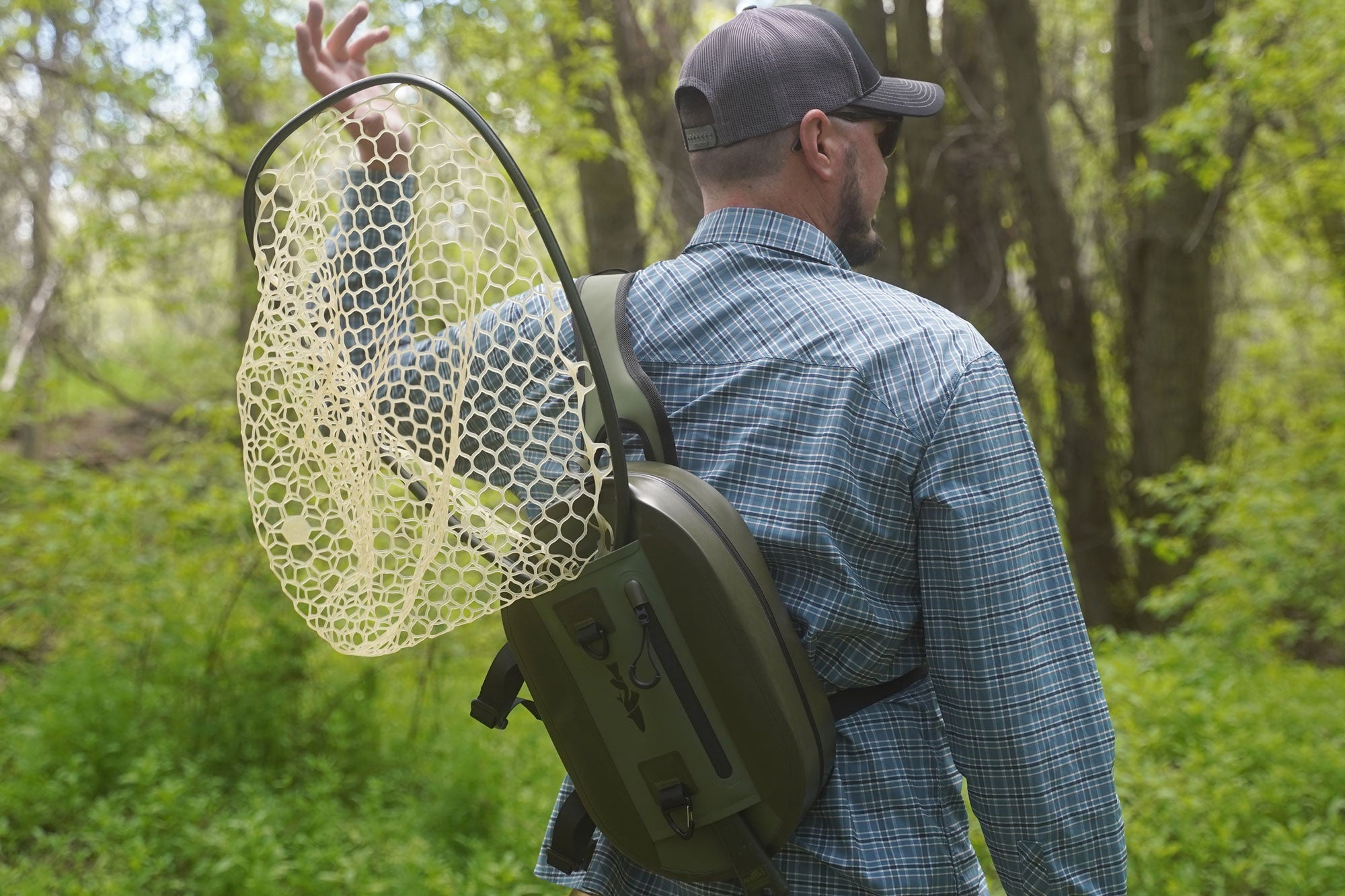
You don't need fancy gear to fight fish well, but a few pieces make the job easier and kinder to the fish. A rubber net is at the top of my list. Rubber mesh is gentler on a trout's skin and fins than knotted nylon, and flies don't tangle in it nearly as much. Our nets collection has everything from budget rubber nets to handcrafted wooden ones.
Forceps are the next must-have. Keep them clipped where you can grab them with one hand. Browse the forceps collection for a pair that fits your hand. And if you're just getting started, a balanced rod and reel combo with a smooth drag takes a lot of the guesswork out of fighting fish. Take a look at our fly rods, reels and combos. The same guest tips roundup behind the callout above, Gear Tips That Actually Matter, has more advice from people who build and use this stuff every day.


Everything you need to land and release trout
Frequently asked questions
How long should it take to land a trout?
Most trout under 16 inches should be landed in well under a minute, and even large trout on 5X tippet can usually be netted in two to three minutes with good side pressure. If a fight is stretching past five minutes, you're probably not applying enough pressure or the fish is using the current against you.
Why do I keep losing trout right at the net?
Trout are most often lost at the net because the angler tries to net a fish that still has energy, or swipes the net at the fish from behind. Keep the net submerged and still, wait until the trout's runs get short, lift its head, and lead it into the net head first.
Should beginners fight trout off the reel or by stripping?
Beginners can strip in small trout by hand, but any trout that runs hard or is over about 14 inches is easier to land on the reel. Getting the loose line back onto the spool keeps it from tangling and lets the drag protect your tippet.
Does side pressure work on small streams?
Side pressure works on small streams too, but you usually need less of it. On tight water, a low rod angle helps steer trout away from undercut banks, roots and logs. The same rule applies: pull the fish's head in the opposite direction from where it's trying to go.
Is a rubber net better for trout?
A rubber net is better for trout in most cases because rubber mesh is gentler on the fish's skin, slime and fins than knotted nylon. Rubber also doesn't tangle hooks as easily, so you can unhook the fish faster and get it back in the water sooner.
What water temperature is too warm for catch and release trout fishing?
Many anglers stop fishing for trout once water temperatures reach about 68°F. Montana FWP uses maximum daily water temperatures of 73°F for three consecutive days as one trigger for hoot-owl restrictions and notes that 77°F or more can be lethal to trout.
Short fights, happy fish
Ryan's second big rainbow came out of the same run a couple of weeks later. This time the rod went low and to the side the moment the fish ran, he switched angles twice, steered it into the soft water behind a boulder he'd picked out before he cast, and I slid the net under it head first. Ninety seconds, maybe less. The fish swam off strong, and Ryan grinned for the rest of the afternoon.
That's the whole point. Fighting a trout well isn't about muscle or expensive gear. It's about angles, a light drag, a plan for where the fight ends, and a little patience at the net. Get those right, and you'll land more of the fish you hook while releasing them in better shape. That's what we're all about at the Fly Fishing Insider Podcast: helping you catch any fish, any time, and anywhere, and making sure those fish are still there next season. For more fundamentals, the Ultimate Guide to Beginner Fly Fishing: Technique is a great place to keep learning.
Join the FFIP Insiders
Get gear deals, trip intel, and tactics to help you catch any fish, any time, and anywhere — straight to your inbox.
Join free →Tag us on Instagram at @flyfishinginsiderpodcast with your next quick release, and tell me how side pressure worked for you. If you want deals on nets, forceps, rods and trips, join the FFIP Insiders email list. I'm Christian Bacasa, and I'll see you on the water.
Tight lines, everyone!