
Short answer: click-pawl is simple, light, and makes the sound people love, but you supply the pressure by palming the spool. A disc drag gives smooth adjustable resistance and is what you want for anything that runs hard. Sealed disc drags survive salt, sand, and grit — at the cost of being harder to fix in the field.
The drag system plays a pivotal role in your success. It's the subtle yet powerful feature that often decides the fate of your catch, and understanding the types available is crucial for any angler looking to elevate their fishing.
What a drag system actually does
The drag applies tension to the arbor and transfers that to the line, dictating the speed at which a fish can strip line off the reel. That control is vital when battling larger, stronger species that genuinely test your gear.
Here's the principle worth remembering: your reel should not be the weakest point in your system. It should be a tool that supports your system's weak points so you can land the fish.
The two types of drag system
Click-pawl drag
A traditional system using a mechanical clicker (pawl) against gears to slow the line's release. It's simple, reliable, and often adjustable, but it may require manual intervention — palming the spool — for added pressure.
If that appeals, the NIRVANA Vintage Click Pawl Reel is exactly this. On small water with light rods, the sound is a large part of the point.
Disc drag
The modern system replaces the clicker with a disc, providing smooth, controlled resistance. Made from plastic, cork, or carbon fibre, it offers greater adjustability and is ideal for stronger fish.
Within disc drags there are two major types: drawbar and sealed drum. Drawbar used to be more common, but sealed systems have evolved over the years and become more reliable. Disc drags are commonly designed with cork because it dissipates heat well, though more modern materials are now producing excellent results.
The downside of sealed types is that they often aren't field repairable. Food for thought from my end: drags don't typically fail unless you're allowing fish to make big runs on high drag settings.
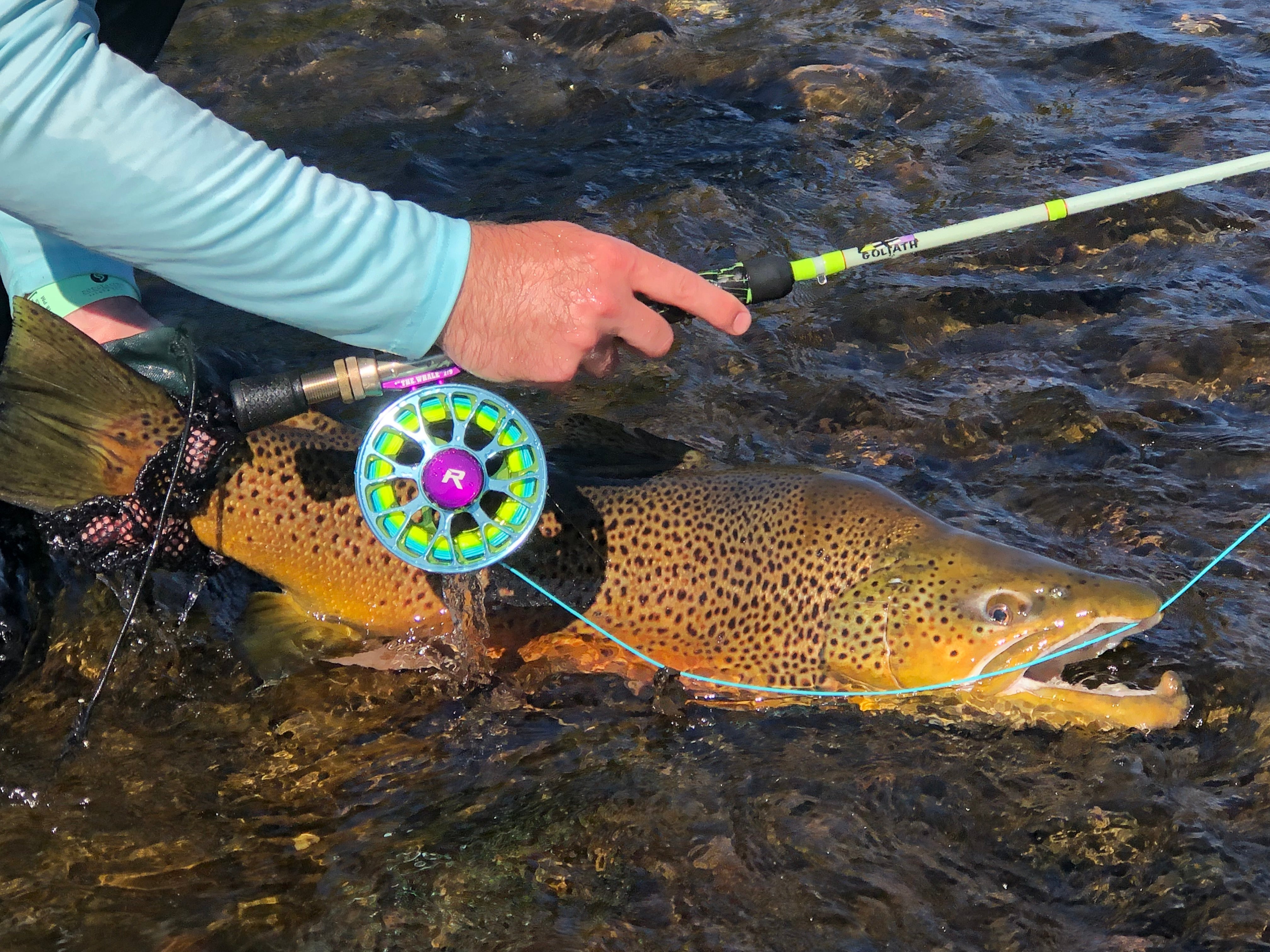
For a sealed drag built to handle genuine runs, "THE WHALE" covers 7/9 through 12/14. For trout-weight disc drags, the Armor II and Gideon run 3/4 to 7/8.
The benefits of choosing the right drag
- Effective fish handling. A suitable drag lets you handle fish more effectively, reducing the risk of breaking off and raising your odds of landing them.
- Adaptability to conditions. Sealed drags are popular where salt, sand, or dirt can enter the system. Keeping that sealed within the cage prevents the malfunctions that end in failure.
- Long-term durability. A sealed drag is protected from the elements, compared with systems where exposed parts wear and degrade.
Why drag systems matter
Increased success rate
A reliable drag increases your chances of landing fish in challenging situations. Putting a fish on the drag frees you to focus on everything else — driving the direction of the fish, bowing your rod, keeping it away from obstacles.
Enhanced experience
Smooth, consistent drag makes for a less frustrating day. We've all been there: an old reel, muddy water somehow gets in, and the drag stops working properly. What should have been a standard catch becomes a debacle of trying to control a fish without breaking off.
Cost-effectiveness
A suitable drag saves money by reducing repairs and replacements. Although failure isn't all that likely, time is the real cost. If I spend an evening off the tying vice researching a reel repair and then wait a week for parts, I've lost a lot in time.
The bottom line
The drag is a critical component, influencing both your success and your enjoyment. Whether you opt for the traditional feel of a click-pawl or the modern precision of a disc drag, understanding the mechanism is key to choosing a reel that aligns with your fishing and your targets.
In fly fishing, the right drag system doesn't just control your line — it supports your entire angling experience.
See all reels in fly rods, reels and combos, or start with a matched rod and reel combo.
The rest of the series
- Overall Guide
- Part 1 — Understanding Quality and Price
- Part 2 — Compatibility and Size
- Part 4 — Arbor Size
- Part 5 — Manufacturing and Construction
- Part 6 — Extra Spools and Versatility
- Part 7 — Lifetime Warranties and Brand
Go on a fly fishing trip you'll never forget
We partnered with Frontiers Travel to put you on water that's worth the flight. Tell them where you want to go. Don't wait.
Book a TripTight lines, everyone!

By Christian Bacasa
Host of the Fly Fishing Insider Podcast
Fly Fishing Insider Podcast Official Website
@flyfishinginsiderpodcast
@dupeafish
Watch on YouTube
Fly Fishing Insider Podcast has a referral partnership with Frontiers International Travel. If you book after being introduced through us, we may receive compensation at no additional cost to you.