
Short answer: a large arbor picks up more line per rotation and reduces line memory, which matters when a fish runs. A standard arbor is fine on small water. Most modern reels have gone large arbor because the old weight penalty has largely disappeared.
Fly fishing is a sport of precision and finesse, where every component plays a role. Among these, arbor size is a feature that often goes unnoticed but has significant implications for your fishing.
What the arbor is
The arbor refers to the central hub of the reel's spool. Its size affects how much line the reel holds and how quickly it retrieves. There are two main types.
Standard arbor
The traditional design with a smaller diameter. Ideal for smaller bodies of water where large line capacity and rapid retrieval aren't crucial.
Large arbor
A modern design with a larger diameter, allowing quicker line pick-up and better line management. Especially useful for big game fish, or any situation where rapid retrieval is essential.
The benefits of choosing the right arbor
Improved line retrieval
A large arbor picks up more line per rotation, which is essential for species that make long runs. Think of it this way: if you wrapped ropes of the same length around a small tree and a large tree, which finishes faster? The large tree, of course.
The fewer times I need to reel, the better — I can get the fish onto the drag and into the boat without a long exposure to potential problems.
Better line management
Larger arbors reduce line memory (coiling) and enable smoother, more efficient casting. Coiling can be a nightmare, and a large arbor reduces it. It's a subtle difference, but it keeps you from tangling and micromanaging line while fighting a fish.
Worth knowing: backing plays a role here too, because it fills the arbor so your fly line sits at a wider diameter. See leaders and backing, and Understanding Fly Fishing Lines for how line memory actually behaves.
Adaptability
The right arbor size lets the reel adapt to conditions — but more importantly, it lets you adapt. Weight and efficiency can be matched to your needs. The right tool for the job, as my dad would say.
Why arbor size matters
Efficiency
The appropriate arbor size greatly impacts your efficiency, enabling quicker response times when they're needed.
Compatibility with your fishing style
Whether you prefer a leisurely day on a local stream or an adventurous outing in the ocean, arbor size shapes the experience. And in reverse: you don't want to end up in the Sea of Cortez fighting a prized roosterfish that keeps making blistering runs while you're on a small arbor. You'd be reeling repeatedly, exhausting yourself to the point where a siesta becomes mandatory.
Prevention of line problems
A correctly sized arbor helps prevent tangling and memory. Take saltwater as the example: typically in a panga you're a team of three, where the second angler helps the on-deck angler manage their line. Coiling is an absolute nightmare there because it's an inevitable tangle. Next thing you know the day is miserable for both of you and the primary focus is tangles rather than fishing.
Matching an arbor to your fishing
For small streams and light rods, the WLR Reel is a dedicated 1/3 weight where a standard arbor makes sense. Across the trout range, the Armor II and Gideon cover 3/4 to 7/8, and the Moonlit Eclipse runs 2/4 to 7/8.
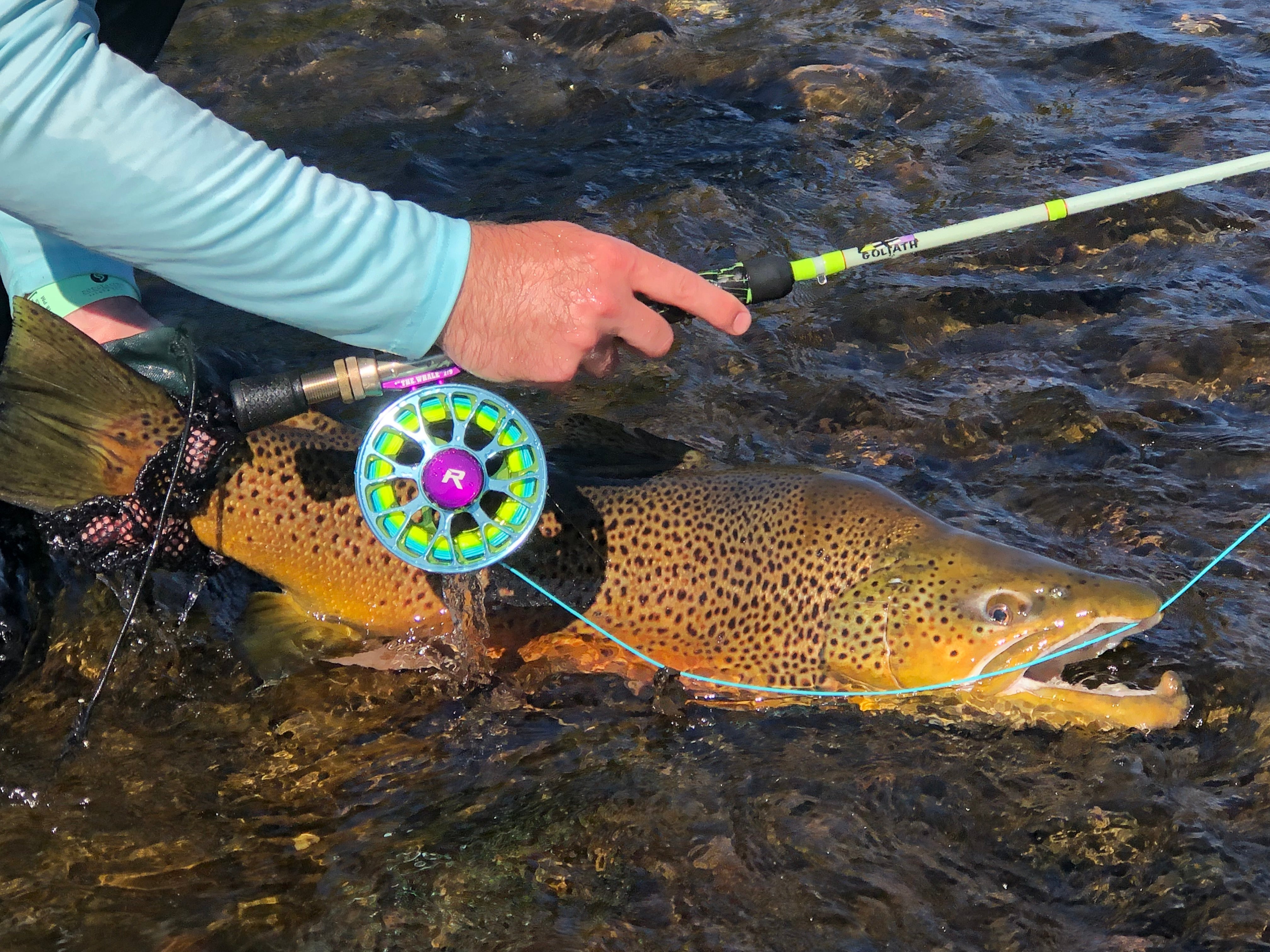
For the roosterfish and panga scenarios above — where arbor size genuinely decides the outcome — "THE WHALE" covers 7/9, 9/11, and 12/14 with the capacity and pick-up rate those fish demand.
See everything in fly rods, reels and combos.
The bottom line
Arbor size is more than a technical specification — it's a feature that significantly affects your efficiency and enjoyment. Whether you opt for standard or large, understanding the implications helps you make an informed decision that aligns with how you actually fish. In the nuanced world of fly fishing, the right arbor size can be the difference between a good day and a great day.
The rest of the series
- Overall Guide
- Part 1 — Understanding Quality and Price
- Part 2 — Compatibility and Size
- Part 3 — Drag Systems
- Part 5 — Manufacturing and Construction
- Part 6 — Extra Spools and Versatility
- Part 7 — Lifetime Warranties and Brand
Tight lines, everyone!

By Christian Bacasa
Host of the Fly Fishing Insider Podcast
Fly Fishing Insider Podcast Official Website
@flyfishinginsiderpodcast
@dupeafish
Watch on YouTube
Fly Fishing Insider Podcast has a referral partnership with Frontiers International Travel. If you book after being introduced through us, we may receive compensation at no additional cost to you.