
Short answer: reel quality comes down to material and anodization, drag smoothness, and whether the machining is tight enough that line can't slip between cage and spool. Price reflects those things plus brand and country of manufacture — and the gap between a good reel and an expensive one is smaller than the price suggests.
Fly fishing combines skill, patience, and the right equipment. Among the essential gear, reels hold a special place. The interesting thing about a reel is that although you only truly need its technical aspects about 10% of the time, it's the reel — your companion — that can make or break the experience.
Quality: more than just a price tag
Quality goes beyond aesthetics. It's about performance, durability, and reliability. Here's what to look at when matching a reel to that beautiful rod you have.
Material and anodization
Construction material significantly impacts durability and performance. Aluminium is the top choice for its manufacturing ease and strength-to-weight ratio. There are lighter materials like titanium, but machining and milling titanium is cost-prohibitive and results in lower repeatability in quality assurance.
Anodization is the second layer of protection on aluminium. Given exposure to water, mineral deposits, and salt, it's a no-brainer — the coating adds corrosion resistance, which is crucial in saltwater. More on that in The Anodization Process and Why We Do It.
Design
A well-designed reel balances ergonomics with functionality. The things I look for are simple but important:
- Can fly line squeeze between the cage and the spool? This is common in lower-cost products where machining isn't tight to spec.
- Is the reel so finely machined that it's lightweight but fragile? That's fine for a reel used locally where you have a spare and can be gentle with it. It's another matter if you're in the middle of Costa Rica and the reel gets damaged because you and your guide are tossing it in and out of a hand-hewn canoe chasing machaca, with no warranty agent around — and the banging is misuse anyway, not a manufacturer's defect.
- Are there lots of moving parts prone to breaking or clogging? And are they field-fixable?
- Test the drag knob and spool removal. Can you remove a spool easily, even if it was overtightened? Can you adjust the drag without looking at it? Does it adjust in micro stages and return to where it was, or is it all over the place?
Looking good matters, but durability overrides it.
Drag system
The drag is critical for controlling fish. A high-quality system provides smooth, consistent tension — crucial for fighting larger fish without breaking off. The three things that matter are smooth transition, adjustability, and consistency once adjusted.
Click-and-pawl and disc drags are the two major styles, and around 80% of what you'll see in a shop is a disc drag. Within disc drags there are two types to consider: drawbar and sealed drum. Drawbar used to be more common, but sealed systems have evolved and become more reliable. Disc drags are commonly designed with cork because it dissipates heat well, though the newer sealed types are more reliable.
The downside is that sealed disc types often aren't field repairable. Food for thought: drags don't typically fail unless you're allowing fish to make big runs on high settings. If that isn't your fishing, a sealed drag is likely the preference. Part 3 covers drag systems in full.
Size
Reel size should match your rod and your fishing — but within reason. This is often pushed as critically important when it actually isn't. Weight is relative, and the reel's weight changes depending on the grain weight of the line you put on it. Many reels also get transferred between rods and have spools changed.
Will a balanced rod make your day a little easier? Sure. Is it a necessity with drastic effect? No, provided size is selected relative to the rod. Part 2 covers compatibility and size.
Price: reflecting quality and features
Prices range from $50 to over $1,000. Higher-priced reels often offer better materials and more advanced features, but consider whether those align with your fishing.
Some of the price difference reflects where the reel was manufactured, the brand name, the size of the manufacturer, and their ability to bring cost down. All of that is worth weighing, and it's fine to ask the important question: "what makes this one so expensive?" Don't just take the answer at face value — visually inspect and form your own hypothesis.
The benefits of investing in quality
Durability
A quality reel withstands frequent use and harsh environments, making it a long-term investment. Where will you use it — river, beach, fresh, salt? With guides who may not care for it as you would, or as a prized possession only you handle? Each scenario changes what matters.
Performance
Better materials and design translate to smoother operation and better line control. Good anodization makes a difference. Inspect the interior drag parts. Then ask how it feels: does the reel work with the ergonomics of your hands, and is the drag knob easily identifiable without looking?
Versatility
Quality reels often include features that accommodate different conditions. A cassette system is a good example — ideal for stillwater anglers who need to save space and carry multiple line types on a boat. At the specialist end, some manufacturers build multiplier reels that multiply arbor rotation for faster retrieve, and auto-retrieve reels that take up excess line to improve line control.
Why these features matter
Longevity
A durable reel means fewer replacements. That's a fair point, though if I were looking to save money I don't think I'd have started fly fishing. Longevity to me means it works the same in ten years as it did out of the box.
Think of it as lifetime investment cost. If a reel is $500 and gives you enjoyment for 10 years, that's $50 a year. Use it 25 times a year and it costs about $2 per outing. Not a bad deal for a day of fishing. If it costs $500 and lasts two years — that adds up quickly.
Success rate
The precision and control of a quality reel increases your success in landing fish, especially with larger species where drag is genuinely being used. A 150-pound tarpon on a reel with a small arbor and a jumpy drag is a nightmare on top of the regular nightmare they already are.
Enjoyment
Land more fish, more enjoyment. Peace of mind that your equipment works, more enjoyment. Looking good doing it is often just as important, so don't forget that either.
Reels we carry
Applying the criteria above to what's in our shop:
- Armor II Reel — 3/4, 5/6, 7/8, in three matte anodized finishes. Matte also cuts glare off the reel face on a bright day.
- Gideon Fly Reel — Emerald Green or Gunmetal, across three sizes.
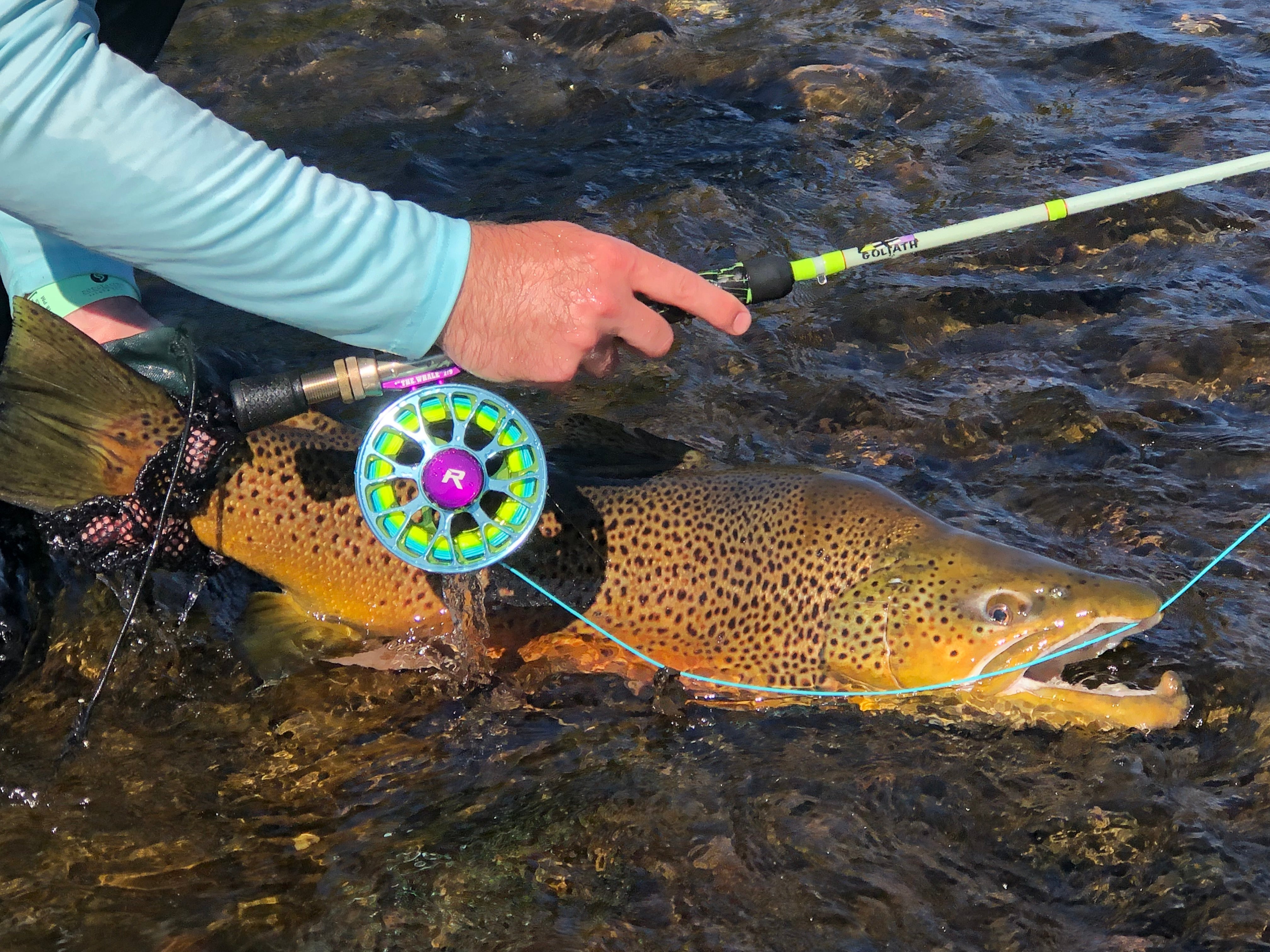
- "THE WHALE" Reel — 7/9 through 12/14, with the sealed drag that matters when a fish is genuinely running.
- WLR Reel — a dedicated 1/3 weight for small streams.
- NIRVANA Vintage Click Pawl Reel — if the click-and-pawl discussion above appeals to you.
- Moonlit Eclipse Reel — 2/4 through 7/8, left-hand retrieve as standard.
Want it ready to fish? The Silvertip II 3/4 and 5/6 come pre-spooled. See everything in fly rods, reels and combos.
The bottom line
Selecting a reel is a balance between quality and price. A good reel is not necessarily an expensive one — it's an investment in your passion that fits your needs. Choose wisely and it will be a faithful companion on many memorable trips.
The rest of the series
- Overall Guide
- Part 2 — Compatibility and Size
- Part 3 — Drag Systems
- Part 4 — Arbor Size
- Part 5 — Manufacturing and Construction
- Part 6 — Extra Spools and Versatility
- Part 7 — Lifetime Warranties and Brand
Book the season you actually want
The best weeks on the best water go early. Plan it with Frontiers Travel — don't wait.
Plan Your TripTight lines, everyone!

By Christian Bacasa
Host of the Fly Fishing Insider Podcast
Fly Fishing Insider Podcast Official Website
@flyfishinginsiderpodcast
@dupeafish
Watch on YouTube
Fly Fishing Insider Podcast has a referral partnership with Frontiers International Travel. If you book after being introduced through us, we may receive compensation at no additional cost to you.