
Yes, most anglers overthink fly fishing. The few things that actually move the needle are finding where fish are holding, getting your fly down to their depth, and a drift that looks like real food. Fly pattern, color and gear come after those three. Get location, depth and drift right first, and most of the noise goes away.
Picture it. You're knee deep below a nice riffle, fly box open, third fly change in twenty minutes, squinting at a tiny hook eye while your buddy Jay, thirty yards upstream, sets the hook again. Same run. Same bugs. He hasn't changed his nymph since breakfast.
I've been on both sides of that picture. Here's the thing: Jay isn't luckier than you, and his fly isn't magic. He's just not thinking about the hundred things that don't matter much, so all of his attention goes to the three that do. If the promise at the Fly Fishing Insider Podcast is helping you catch any fish, any time, and anywhere, a lot of that starts with getting out of your own head.
The Old Way of Thinking: Why Do Anglers Overthink Fly Fishing?
The default mindset goes like this: every slow minute is a puzzle, and the answer is in the gear. No eats? New fly. Still nothing? Lighter tippet. Still nothing? Different color, different leader, maybe the rod is wrong. Fly fishing looks technical from the outside, and the fly shop wall, the internet and the guy in the parking lot all hand you more options. It feels like more options should mean more control.
It's a lot like a golfer who buys a new driver every time he slices the ball. The club was never the problem, and every new club just adds one more thing to think about on the tee. On the river, every change you make is time your fly isn't in the water. And every change you make without a reason teaches you nothing, because you never find out which change mattered.
The worst part is what overthinking does to your confidence. You tie on a fly, it doesn't get eaten on the first few drifts, and you quietly decide it doesn't work today. From there you fish it half-heartedly, and it fails because you stopped fishing it well, not because the trout rejected it.
The Mindset Shift
Fly fishing isn't a hundred small decisions. It's three big ones: where the fish are, how deep they're eating, and whether your drift looks like food. Answer those, and everything else is detail.
Where the fish are. Trout hold where food and cover meet: seams, drop-offs, the soft water beside fast water. A perfect fly in empty water catches nothing. If you're not sure a spot holds fish, that's the first question to answer, not the last. Our guide to reading water like an expert angler goes deeper on this.
How deep they're eating. Trout do a lot of their feeding below the surface. If your nymph drifts above them, they may never see it. Depth is usually the fastest fix on the river, and it's the one most anglers skip on the way to the fly box.
Whether your drift looks like food. A natural bug drifts at the speed of the water it's in. A fly that drags, swings or hangs up looks wrong, no matter how good the pattern is. Once those three are handled, a short list of proven flies covers most days, and our list of trout flies that work anywhere is a good place to build that short list.
How This Plays Out on the Water
Several guests on the Fly Fishing Insider Podcast have made this case better than I can, and they came at it from very different angles: a working trout guide, a competition angler, and an Alaska lodge owner. Here's what the three decisions look like in real situations.
The trout that keeps ignoring your nymph
The old move is to open the box and start cycling patterns. The simpler move is to check depth first. On his episode of the Fly Fishing Insider Podcast, guide and veteran Ben Gerloff made the case for picking one buggy, middle-of-the-road pattern for each of the main bug groups and committing to it. His point was blunt: if you don't have faith in a fly, don't fish it, because the fly usually isn't what's wrong.
Ben Gerloff's first adjustment is weight. He adds more than feels comfortable, until the rig is touching bottom regularly, and accepts a few more snags as the price of fishing where trout actually feed. He also keeps his fly on the water instead of false casting, because a fly in the air can't get eaten.
Ben Gerloff on why he rarely changes flies and adjusts depth and weight instead, from the Fly Fishing Insider Podcast.
The vest that weighs more than your waders
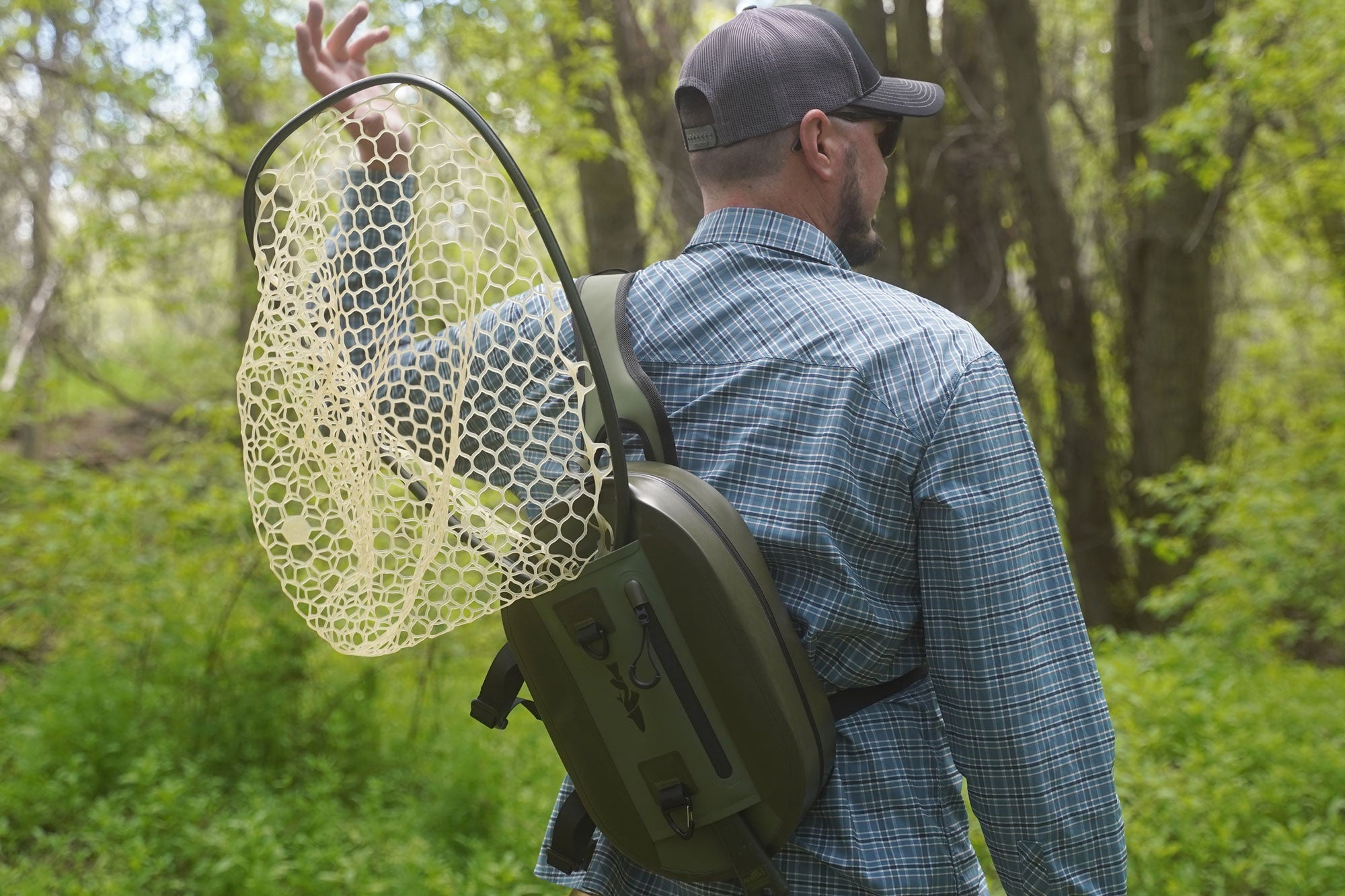
It's easy to carry every fly, gadget and leader you own, just in case. Pennsylvania competition angler Mike Komara goes the other way. On our episode on simplification, Mike Komara explained that he usually fishes a single fly because it gives him more control over where that fly sits in the water column, and far fewer tangles. His boxes hold a short list of patterns, mostly the same flies tied in different weights, so changing depth rarely means changing his whole approach.
He carries very little else: rod, flies, tippet, floatant, a net and a marker for his sighter. The payoff is attention. With less gear to manage, his focus goes to the water. He often adjusts depth by changing his casting angle and how much slack the fly gets before it lands, before he reaches for a heavier bead. And because he trusts every fly in his box, he fishes each one aggressively, tight to cover, and doesn't mind losing a few to the brush.
Competition angler Mike Komara on fishing a single fly and keeping his box and kit simple, from the Fly Fishing Insider Podcast.
The run that should be producing, but isn't
You found a great-looking run, you've fished it hard, and nothing. The overthinking move is to stand in the same spot and re-rig. Alaska lodge owner James Johnson had a different answer on his Fly Fishing Insider Podcast episode: keep moving. If a couple of good drifts don't produce, take a few steps and fish new water. As we talked through on that show, new water doesn't have to mean a new river. It can mean the inside of the run, the tailout, or a few feet to your left.
James Johnson also named the fear that keeps people planted: worrying that if you leave, someone else will step into your spot. A spot that isn't producing isn't holding anything for you. Work through it, rest it, and come back later with fresh eyes.
Take two steps before you re-rig. Park City, Utah guide Zach Lassek learned this one early, when a mentor had him move a couple of steps forward and make the exact same cast, and that was the whole difference. The rig was never the problem, the position was. It's the cheapest adjustment in fly fishing, so make it before you open the fly box. Zach Lassek tells the story on his Fly Fishing Insider Podcast episode.
What Are the Most Common Overthinking Traps in Fly Fishing?
These aren't casting or rigging mistakes. They're the mental habits that keep good anglers busy doing everything except fishing.
Treating every slow minute as a gear problem. It feels productive to change something, so you change the thing that's easiest to reach: the fly.
Ask the three questions in order before you touch the box. Am I where fish are holding? Am I at their depth? Does my drift look natural? Only when all three are a confident yes does the fly become the question.
Writing off a fly after a few drifts. No eats in the first few casts, so the fly "isn't working today," and you start fishing it half-heartedly.
Fish every fly like you believe in it until you have an actual reason to change, not a feeling. If you don't believe in a fly, leave it in the box and tie on one you do.
Changing three things at once. New fly, new tippet and a new spot all at the same time, and then the fish eat.
Change one thing at a time. When something works you'll know exactly what it was, and you'll carry that into the next trip instead of starting over.
Being afraid to leave a good-looking spot. Someone might take it, and it looks like it should hold fish.
Looks don't catch fish. Give a run a fair, systematic try, then move. New water, even a few steps away, beats another twenty casts to fish that have already said no.
Author's Story & Key Insights
When I started guiding here in Utah, I carried a fly box that looked like a candy store. Every time a client went quiet I'd start pulling patterns, and it felt like working hard for them. One slow morning on the Provo River, which has always been my home water, my buddy Todd was fishing the same run beside us. He never changed his nymph. He added a little weight, moved a few steps between drifts, and quietly caught fish while we cycled through half my box.
That morning changed how I guide. Now the first things I adjust are position and depth, and the fly box stays shut a lot longer. My clients catch more fish, and honestly, so do I. Long story short:
- The fish decide where the day happens. Find them before you fix anything else.
- Depth and drift fix more slow days than fly changes do.
- A small box of flies you trust beats a big box you second-guess.
- Moving is an adjustment too, and usually the fastest one available.
Pro Tip from Christian
Before you change anything, ask three questions out loud: Am I where the fish are? Am I at their depth? Does my drift look like food? If any answer is "I'm not sure," fix that first. The fly box stays closed until all three answers are yes. It sounds almost too simple, and that's exactly the point.
Keep it simple out there
Next time you catch yourself reaching for the fly box, stop, run the three questions, and tell us how it goes. Tag us @flyfishinginsiderpodcast. For more guest insights like these, the newsletter and the full episode archive are the best places to find them.
Join the FFIP NewsletterBrowse the EpisodesGo on a fly fishing trip you'll never forget
We partnered with Frontiers Travel to put you on water that's worth the flight. Tell them where you want to go. Don't wait.
Book a TripFly Fishing Insider Podcast has a referral partnership with Frontiers International Travel. If you book after being introduced through us, we may receive compensation at no additional cost to you.