
Pick your fly fishing carry system by how far you walk and how much water you're in. A sling pack suits wading anglers who want fast access and a light load. A backpack suits long hikes, full days and backcountry trips. A chest pack suits deep wading and boat days where everything has to stay high, dry and in reach.
I've owned all three, and I've carried the wrong one plenty of times. The sling that's perfect for a three-hour evening on a local river turns into a shoulder ache on a five-mile hike. The backpack that saves your back on that hike makes you take it off every time you need tippet. There's no best pack, only the pack that matches the day you're actually fishing.
So let's do this properly. Below is what each carry system is genuinely good at, the real buying criteria, a side-by-side comparison of packs in the Fly Fishing Insider Podcast shop, and the mistakes I watch anglers make on the water. If you want the wider roundup of less-obvious options, I've also written 8 Best Fly Fishing Vests and Packs That Aren't Mainstream.
Kelly Reaume of Backcountry Skinz joined me to talk alpine lakes, pack rafts and how he carries camera gear and a rod at the same time without losing fishing time. Episode page.
The pack I'd grab for each kind of day
Sling Pack vs. Backpack vs. Chest Pack: What Each One Is Actually Good At
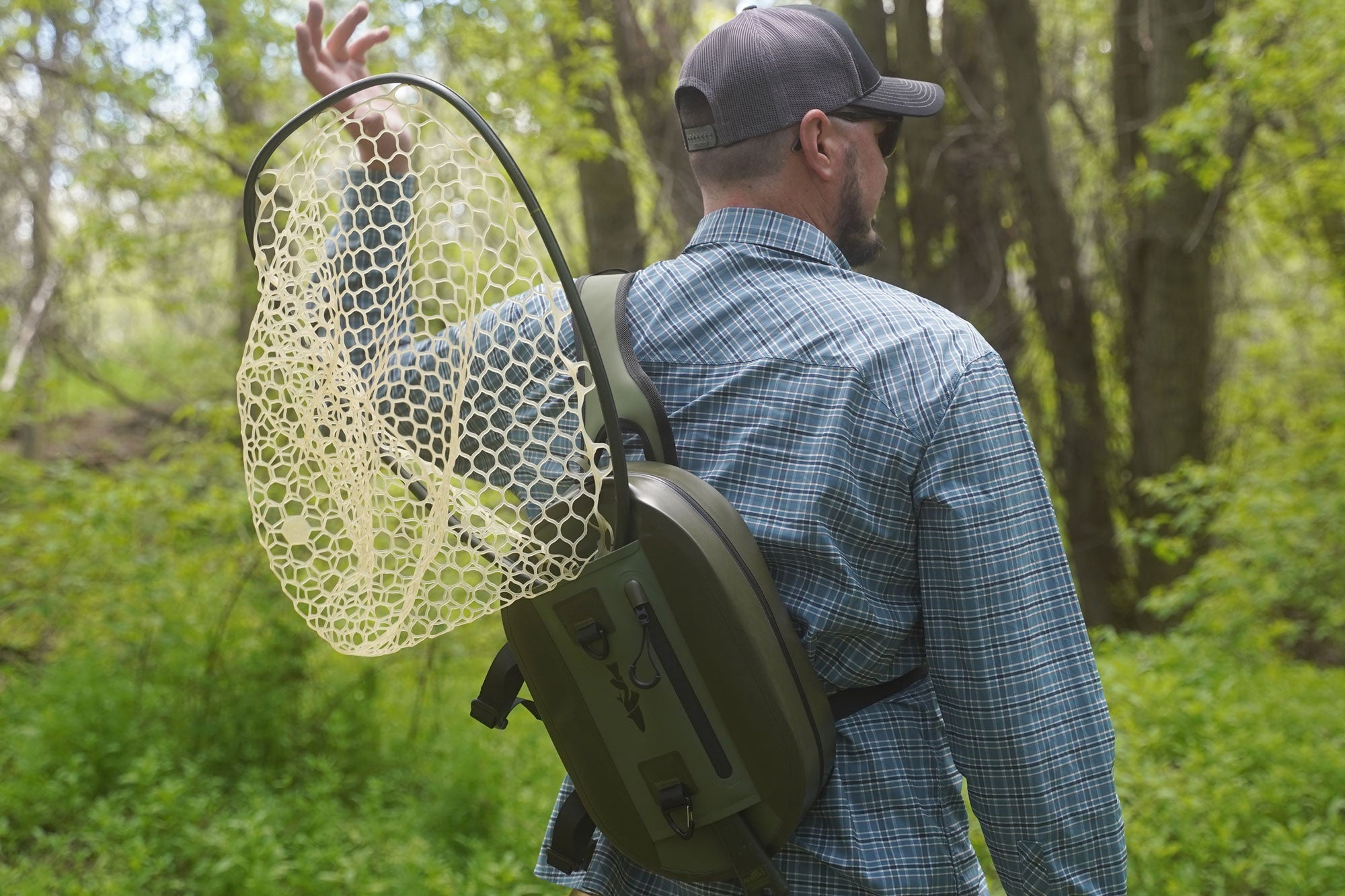
A sling pack rides on one shoulder, sits on your back while you walk and swings around to your chest when you need something. That single motion is the whole appeal. For a wading angler who changes flies often and carries a half day's gear, a sling is hard to beat.
A fly fishing backpack spreads weight across both shoulders and your hips, which is what you want once you're carrying water, layers, lunch, a camera or a pack raft. The trade-off is access. Anything in the main compartment means stopping, taking the pack off, and putting it somewhere dry.
A chest pack keeps your tippet, nippers and a fly box directly under your chin, above the waterline, and never asks you to reach behind you. It's the system for deep wading, for float tubes and for anglers who want their hands to find things without looking. Its limit is volume: a chest pack alone won't carry a jacket and lunch, which is exactly why the combination packs exist.
How to choose: the five criteria that actually decide it
- Walk distance. Under a mile, a sling or chest pack is fine. Over a couple of miles, or with elevation, a backpack's hip and shoulder load-sharing wins every time.
- Wading depth. If you routinely wade above your waist, put your essentials on your chest. A sling swung around your front still ends up in the water when you're thigh-deep in current.
- How often you re-rig. Anglers who change flies constantly should keep tippet, nippers and one box on the front of their body, whatever the main pack is.
- Water and weather. Carrying water, a rain shell and a midlayer changes the math. That's backpack territory, or a chest pack with a backpack behind it.
- Net and rod carry. Look for a net slot and a rod holder. Being able to stow a rod on your back frees both hands for a scramble, a raft or a camera.
Michael Willy built a whole product around that first point. On episode 16 with FFIP host Greg Keenan, he described how long hikes into Colorado rivers left his lower back aching by midday and pulled his focus off the fishing, so he designed a hip pack with a back brace built into the belt. He also moved the high-touch items to the sides and front of the pack so you're not spinning it around all day. That's the design question in a sentence: where do your hands need to go, and what's carrying the weight while they get there?
If your pack is going into the backcountry, pack it for self-rescue. Tanner Barbeau, a Colorado guide who specializes in high alpine lakes, points out that the water up there is miles from cell service and the weather turns fast. His load-out is worth copying: a lightweight UV water purifier, a whistle, a fire starter, blister pads and, if you hike alone, a satellite communicator. That's the real argument for a backpack over a sling on a big day, because those items need a home.
Fly Fishing Pack Comparison: Sling, Chest, Vest and Backpack
Every pack below is in the FFIP shop, and the prices are what you'll pay at checkout today.
| Pack | Price | Carry type | Best for | Notable feature |
|---|---|---|---|---|
| Blue Line Pack | $39.99 | Waist or neck strap | Short evening sessions, minimalists | Two fly patches, tool attachment points |
| Trails Sling Pack | $59.99 | Sling | All-day wading, fast access | Slot for a net handle |
| Crusade Sling Pack | $69.99 | Sling or chest | Anglers who want both options | Converts between sling and chest carry |
| Mesh Vest Pack | $99.99 | Vest | Hot weather, lots of small items | Breathable mesh, net loop |
| Trek Chestpack with Backpack | $119.99 | Chest + backpack | Long days, hike-in water | Separates into chest pack or backpack |
| Wanderer Vest with Backpack | $129.99 | Vest + backpack | Big loads, all-day trips | Expandable pack, bladder space |
Get the gear breakdowns as they drop
Join the FFIP Insiders for gear guides, new episodes and listener deals. Free signup on our homepage.
Sign up freeThe Packs, One by One

Trails Sling Pack
This is the pack I'd hand most wading anglers first. It's comfortable enough to wear all day, it has enough pockets to organize a real day's gear without turning into a duffel, and it has a slot for a net handle, which is the detail that separates a fishing sling from a hiking sling. Swing it forward, change flies, swing it back.

Crusade Sling Pack
The Crusade solves the argument by refusing to pick a side. Wear it as a sling on the walk in, then run it as a chest pack when you're waist-deep and want everything up high. It carries plenty for a full day and slings front to back easily, which is exactly what you want when a fish is rising and you need a different fly right now.

Trek Chestpack with Backpack
This is the hike-in answer. The chest pack holds the things your hands reach for constantly, while the expandable backpack behind it carries water, layers and lunch, with room for a bladder. It separates, so you can fish the chest pack alone on short outings and add the backpack for a long day. If you hike to your water more than a couple of times a season, this is the setup that stops the trade-off.

Blue Line Pack
Some of my best evenings have been fished with a couple of fly boxes, nippers and a spool of tippet. The Blue Line is built for exactly that: a small pack with a waist strap and a neck strap, two velcro fly patches and attachment points for tools. It's the pack that keeps you moving on small water, and it's the one I'd buy first for a kid or a brand-new angler.

Wanderer Vest with Backpack
If you're the angler who carries everything, including the stuff your buddies forgot, the Wanderer gives you vest-style organization on the front and a real expandable pack on the back, with space for a water bladder. It's the most capacity in this lineup, and the right call for guided-style days, long float-and-wade combinations and photographers.
Round out the carry system
What Are the Most Common Fly Fishing Pack Buying Mistakes?
Author's Story & Key Insights
Here's my expensive lesson. I was fishing in Alaska in full waders and carrying my camera in a soft roll-top dry bag tucked into the front of my waders. We hiked across a deep inlet, so I held everything up high, and the crossing went fine. Then it started raining, so I pulled my rain jacket over the top of the waders and the camera bag and hiked back. What I didn't think about is that the jacket funneled every drop of that rain straight down into the open top of the bag. I got back to the plane and found my camera sitting in a pool of water. The card survived. The camera did not. That's why I now treat waterproofing as a system, not a single bag.
The other thing I've changed is how I think about weight on the water versus weight on the walk. Kelly Reaume described his run-and-gun approach on the podcast: he rigs his rod into a holder on his backpack, mounts a camera to his chest strap so it's ready the instant something happens, and keeps camera gear in a submersible bag. When he reaches an alpine lake, he sheds weight at the shore and fishes light instead of hauling everything around the bank. Carry heavy to the water, fish light at the water. That single idea has saved me more energy than any pack ever did.
And if you fish out of a boat, your carry system changes again. My raft gets modular bags strapped to the frame with daisy chains, which keeps food and tools off the floor and out from under your feet, while a small chest pack handles what I need in my hands. For hike-in alpine days, our backcountry alpine lakes guide covers what actually goes in the pack, and our trip-packing piece helps when you can't decide what to bring.
Pro Tip from Christian
Load your pack, then walk a mile on pavement with it before your first trip. Anything that swings, digs, rattles or makes you reach twice for tippet will annoy you ten times more at hour six with cold hands. Fix it at home, not on the river.
Sling, backpack or chest pack? Match the system to the day: fast access for wading, load-sharing for hiking, high-and-dry for deep water and boats. Buy for the days you actually fish most, and the pack disappears, which is exactly what a good one should do.
Go on a fly fishing trip you'll never forget
We partnered with Frontiers Travel to put you on water that's worth the flight. Tell them where you want to go. Don't wait.
Book a TripFly Fishing Insider Podcast has a referral partnership with Frontiers International Travel. If you book after being introduced through us, we may receive compensation at no additional cost to you.
Tight lines, everyone!
Tell me which carry system you've settled on and why. Join the FFIP Insiders for gear deals, trip intel and tactics to help you catch any fish, any time, and anywhere.
Join freeTag your setup on Instagram @flyfishinginsiderpodcast
Prices, stock and product features were checked against the FFIP shop on September 17, 2026, and can change. Confirm current details on the product page before you buy.