
Fly Fishing Insider Podcast
Northern Minnesota brook trout eat big meals because their streams hold few insect hatches. A two and a half to three inch articulated streamer, fished on a floating line in a foot and a half of water, draws hard strikes, and fish will come airborne to a streamer skated across a riffle.
Geoff Vukelich owns Dam Goods and Gear, building custom rods, nets and paddles from reclaimed wood, and fishes northern Minnesota's Lake Superior tributaries for brook trout.
Also on Apple Podcasts · Spotify · YouTube
Why do northern brook trout eat such big streamers?
The freestone streams of northern Minnesota run over fractured granite and produce very little insect life, so brook trout there are meat eaters by default. The forage base is crayfish, dace, common shiners and native brook stickleback, which is why a two and a half to three inch articulated streamer is a normal size rather than an oversized one. Brook trout will attack far above their weight class in these systems, including six-inch fish hitting six-inch flies.
What is a coaster brook trout and how is it different from a resident?
Coaster brook trout live in Lake Superior and run into tributaries to spawn and feed, growing quickly on a protein diet of ciscoes, herring and whitefish. Most rivers on Minnesota's North Shore have a barrier within about a thousand feet of the lake, so fishing below the barrier is coaster fishing and fishing above it is fishing for residents. Both are worth doing, but a resident brook trout in the twenties is the harder prize, and one such fish measured 23 inches and just over five pounds.
How do cold-water seeps help you find big brook trout?
In dark freestone streams that can drop ten feet between spring melt and fall drought, cold-water seeps are what keep big brook trout alive through the warm months. Study maps and hydrology to guess where seeps should be, then confirm on the water; a strong seep will hold a very large brook trout within about 500 feet of it, because fish that stray farther from cold water often do not survive the season. Some anglers tape a thermometer to a boot and walk upstream watching for a two- to five-degree drop, then work that stretch carefully.
When is the best window to fish streamers for resident brook trout?
The stream trout season opens in April, but northern rivers freeze solid, and water still sitting near 38 degrees keeps resident brook trout dormant and unwilling to burn energy chasing a fly. The real window arrives when baitfish school up to spawn, roughly mid-June into early July, and lasts about three weeks; during it, brook trout are keyed on baitfish and effectively impossible to spook. When water pushes past 58 to 60 degrees, the fish drop back into the pools and seeps and the fast-water bite shuts off.
How do you fish a streamer where the alders make casting impossible?
On alder-choked northern streams, casting is often simply not an option, so the fly gets delivered by current and line management instead. One roll cast puts the fly in the current, then line is paid out to feed it downstream under the branches. The counterintuitive move is to mend toward the bank, which draws the fly in tight, then pull the rod downstream, which shoots the fly upstream and under the alders; strikes there are usually immediate.
What streamer patterns work for northern brook trout?
The go-to is a white and olive articulated pattern of about three inches tied on a single hook: rabbit fur with a cut hook up front, a short braid trailer, a cone head and a cross-cut hair collar for a smooth, fluid action. In systems holding blacknose shiners, which run three and a half to four inches as adults and have a wide body, size the fly up to match. The fly carries the weight rather than the line, because most of this water is only a foot and a half to two feet deep and there is no room for a sinking line.
Why should a streamer angler go fish dry flies somewhere else?
Fishing outside your usual style is what breaks a habit into knowledge. Dry fly fishing on clear, hatch-rich water elsewhere showed one dedicated streamer angler exactly how a trout moves in and out of current, lifts to take, and drops back, and specifically that fish sit tight to the edge of a rock rather than behind it. That single observation changed how he approaches a rock with a streamer, and it was not available from a lifetime of fishing dark water where you never see the fish.
Key takeaways
- Fish glass, cane or a genuinely moderate graphite rod in small streams; a fast rod creates slack on a head shake, and hook pops account for the great majority of lost fish in skinny water.
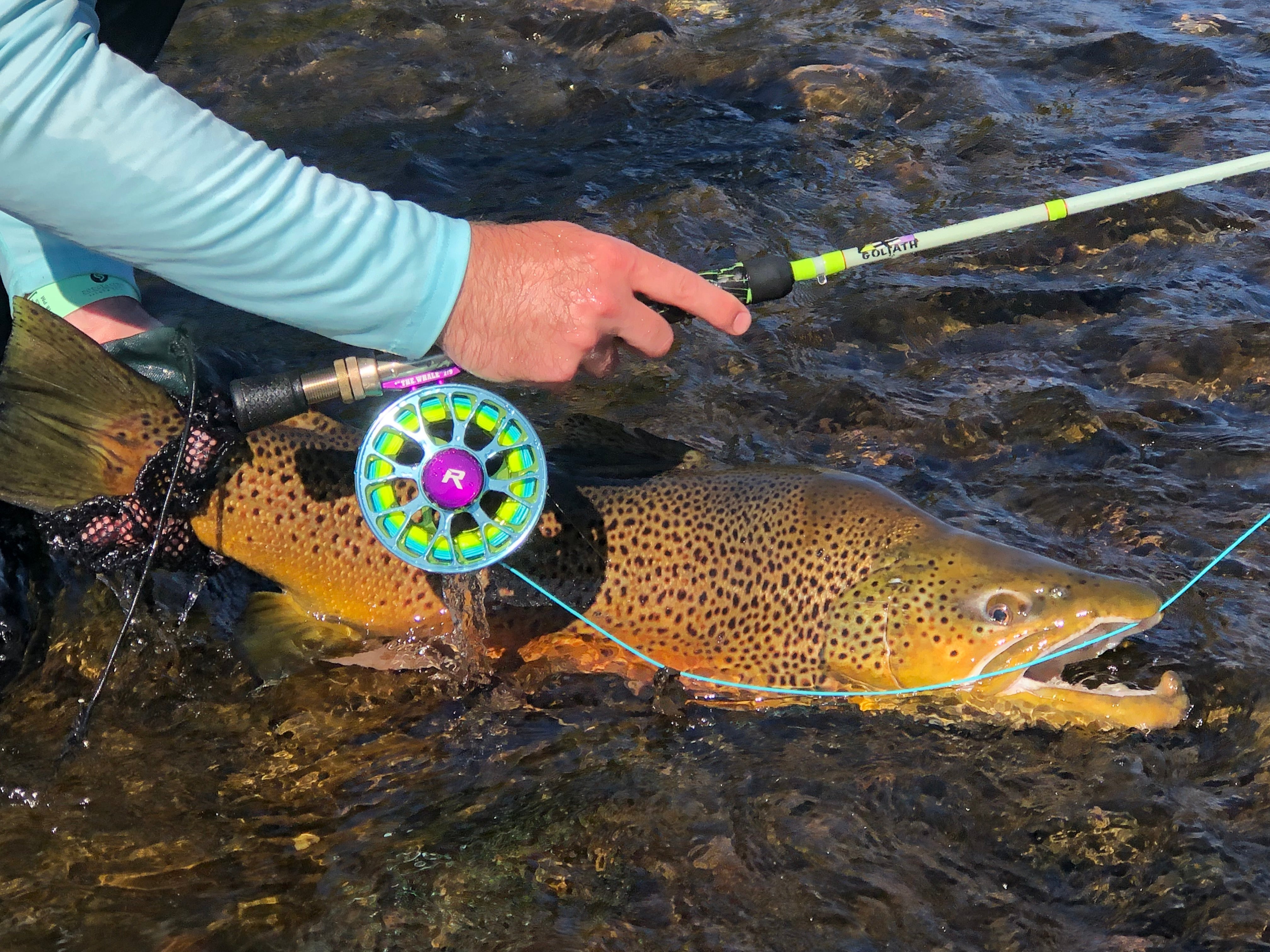
- A five-weight glass rod handles both small stream brook trout and a 22-inch brown, which is a better answer than owning a two-weight for one and something stiffer for the other.
- Look for a two- to five-degree temperature drop to locate a cold-water seep, then work within about 500 feet of it.
- Time the trip to the mid-June to early-July baitfish spawn rather than the April season opener, when the water is still near 38 degrees.
- Skate a four- to six-inch articulated streamer across a riffle and expect fish to come airborne behind rocks.
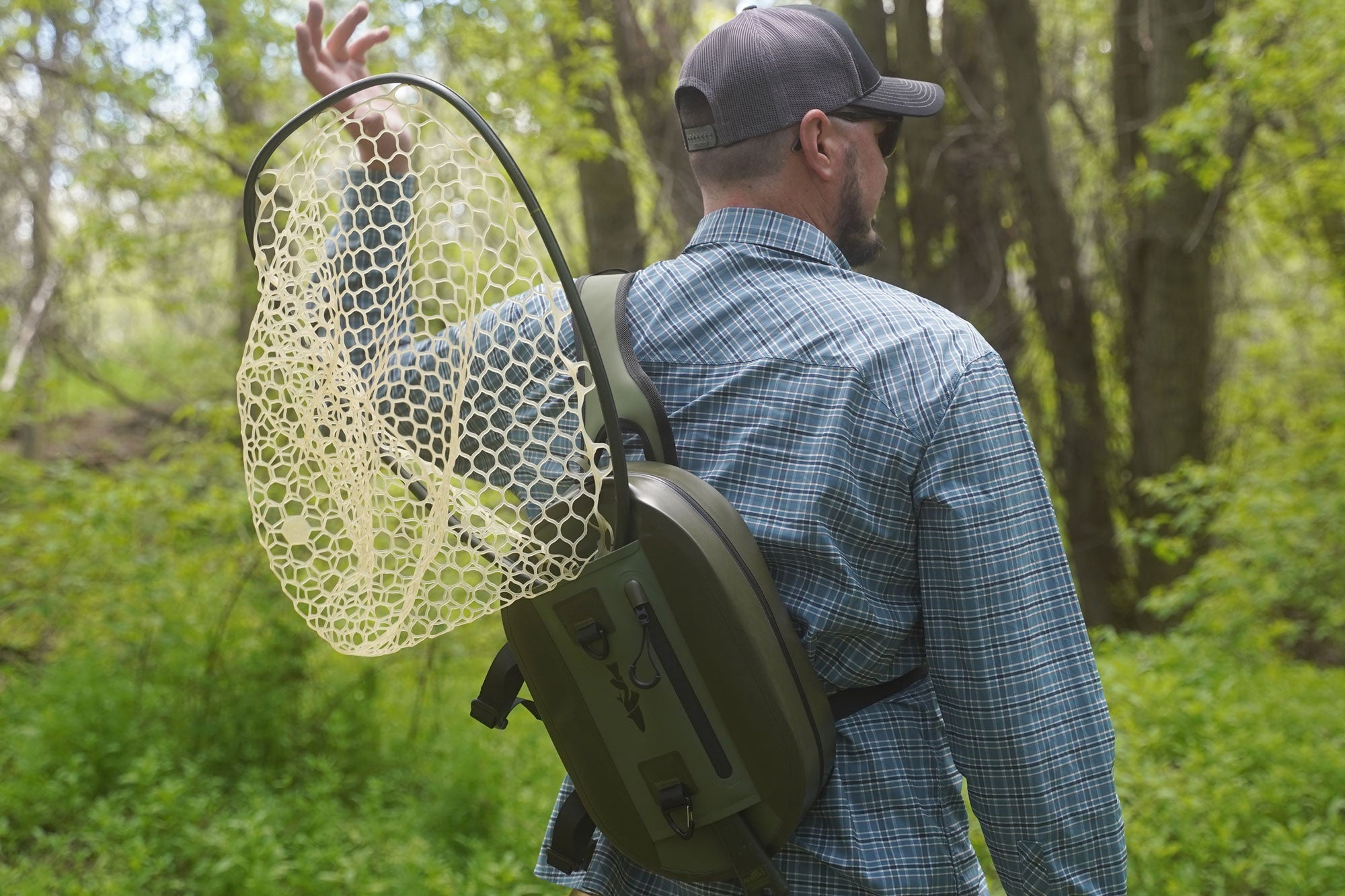
- When ordering a custom net, be honest about the size of fish you actually catch; a mid-twenties net is the wrong tool for water that gives up 13-inch brook trout.