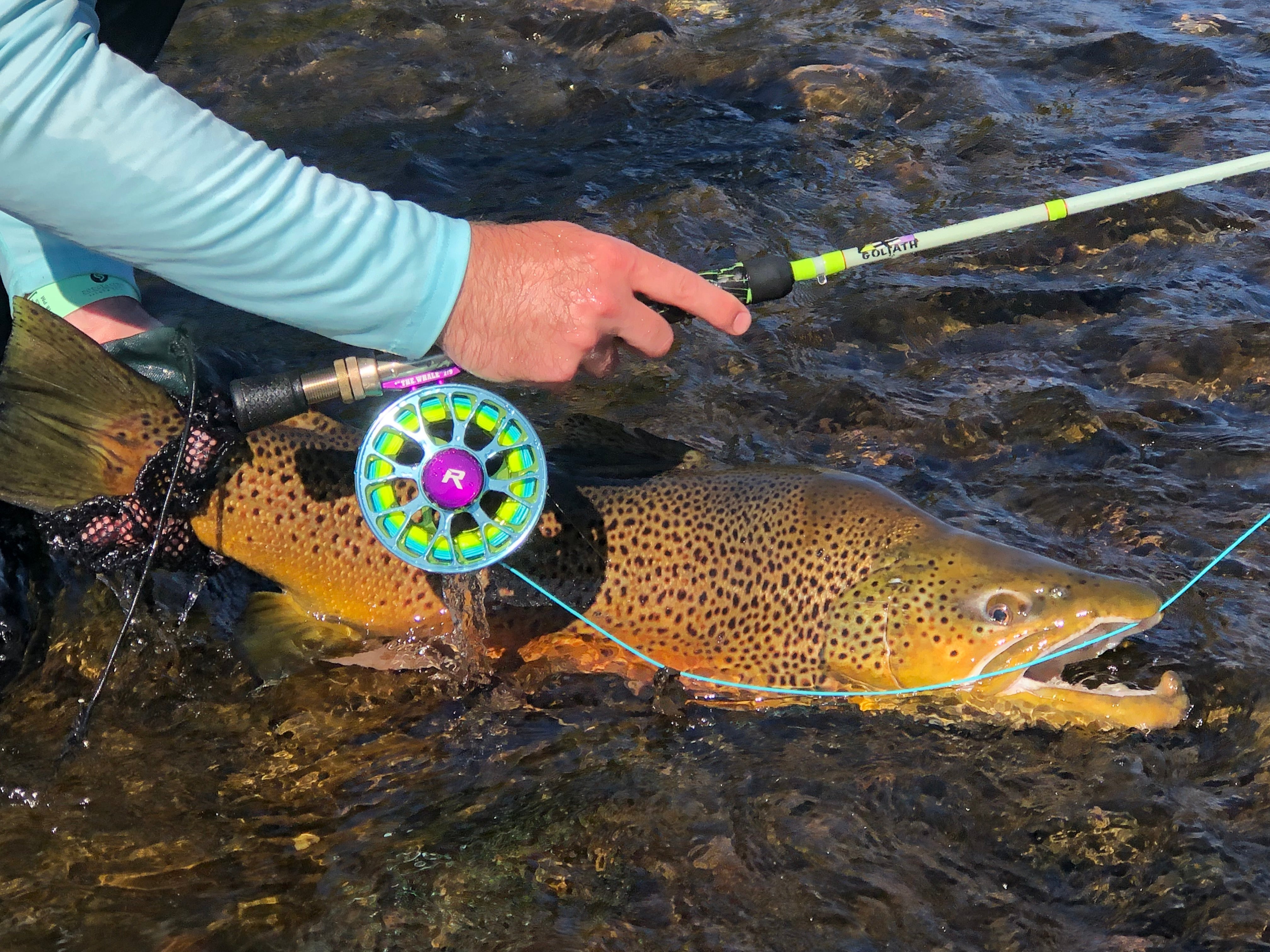

The drag-and-drop method is a carp presentation where you cast a weighted fly a few feet past a feeding carp, lift the rod to skate the fly across the surface into the fish's path, then lower the rod tip so the fly sinks beside its head. You pause, watch for the eat, and set with a strip.
The first time I watched drag and drop carp fly fishing done well, it looked like a magic trick. My buddy Todd was standing on a mud flat on a Utah reservoir, and he put his fly what looked like a mile past a tailing carp. I figured he'd blown the shot. Then he lifted his rod, the fly skittered across the top like a water strider, he dropped the rod tip, and the fly melted into the mud cloud in front of that fish. The carp tipped down, the fly vanished, Todd stripped, and his reel started screaming.
That wasn't magic. It's a learnable presentation, and three different commenters recommended it in a Reddit thread where a brand-new angler asked how to start fishing for carp. If you've been casting at carp and watching them bolt, this is the fix. Let's break it down step by step.
Part of our Carp on the Fly series. New to carp? Start with the beginner's guide to carp on the fly, then come back here to dial in your presentation.
Denver urban guide Nic Hall walked through the drag-and-drop, his carp setup and why trout-style drifts snag carp on episode 229 of the Fly Fishing Insider Podcast. Episode page.
- Land the fly away from the fish. Cast past the carp so the splash never lands on its head.
- Drag across its path, never straight at its face. Nic Hall's reasoning is simple: prey doesn't swim toward a predator.
- Drop it beside the head. Let the fly fall roughly 4 to 8 inches off to one side, where the carp can see it.
- Set on the eat, not the tilt. Wait for the fly to disappear, then strip-set.
- Practice with a clipped hook. Cast the exact fly you'll fish, hook point snipped off, in a park first.
Why Do Trout-Style Presentations Fail on Carp?
Trout-style presentations fail on carp because a common carp (Cyprinus carpio) doesn't hold in a seam waiting for food to drift into its mouth. Carp root and suck food off the bottom, which is why North Carolina Wildlife notes that their feeding muddies the water. A fly tumbling downstream at eye level isn't how their food behaves.
Nic Hall made this point on episode 229 of the Fly Fishing Insider Podcast. Nic fishes the urban South Platte in Denver and went on to lead Denver Trout Unlimited. His take: rig up like a trout angler, with an indicator and a worm pattern drifting through a seam, and you'll often foul-hook carp instead of hooking them fairly. A carp facing upstream sees a fly coming straight at its face, slides out of the way, and the hook catches it as it goes by. He also described carp as opportunists that usually won't move far for food.
Carp also spook easily. Carp and their relatives have a set of small bones called the Weberian apparatus, which Britannica describes as linking the swim bladder to the inner ear to enhance hearing. Matt Martin said on episode 117 that unless the fly is unweighted, landing it right on top of a feeding carp will usually send it running.
So the fly has to end up within inches of the fish's face, but it can't land anywhere near it. The drag-and-drop solves that.
What Is the Drag-and-Drop Method for Carp?
The drag-and-drop method for carp is a sight-fishing presentation in three moves: cast past the fish, drag the fly on or near the surface into position with your rod tip, then drop the rod tip so the fly sinks into the carp's feeding zone. Think of the claw machine at an arcade. You swing the claw into place up high, then let it fall exactly where you want it.
No one person owns this technique, but a few names keep coming up. On episode 117, Matt Martin credited Dan Frasier with developing it. Frasier is the fly fishing editor of CarpPro and author of The Orvis Beginner's Guide to Carp Flies. In an interview with Fly Dreamers, he called it an amazingly accurate presentation that works best inside about 35 feet. On episode 128, Eric Leininger of Fly Fish Portland said Portland carp angler John Montana (real name John Bartlett, who writes the Carp on the Fly blog) showed him this way of presenting the fly.
The Reddit commenters pointed beginners to the Carp On The Fly YouTube channel. That's a good place to start, because seeing the rod-tip timing beats reading about it:
Why Does the Drag-and-Drop Work So Well?
The drag-and-drop works because the loud part of the cast happens away from the fish. The fly, leader and splash all land a safe distance off. By the time the fly reaches the carp, all the fish notices is a small food item settling to the bottom beside its head.
- No splash on the fish. The fly lands past the carp and the fly line lands short of it. Matt Martin said carp are more line-shy than leader-shy.
- The fall is the trigger. Nic Hall said he doesn't strip at all when dragging and dropping. The weighted fly changing depth as it sinks is enough to get a carp to eat, just like a crayfish or nymph dropping back to the bottom.
- Accuracy. Because you steer the fly with the rod tip, you get a second chance to fix your placement before the drop.
In my experience, the fly often kicks up a tiny puff when it touches a silty bottom, like something burrowing in, and that's when a lot of fish commit. Nic talks through this kind of presentation in one of our Shorts:
How Do You Do the Drag-and-Drop, Step by Step?
You do the drag-and-drop by picking a feeding carp, casting past it, lifting the rod to skate the fly into its path, and dropping the rod tip when the fly is inches from its head. Here's how I do it, with the guest details that sharpened each step. Choosing the right fish comes first, so if that's still fuzzy, read how to read carp behavior.
- Pick a feeding fish. Look for a carp with its head down, tail up and mud puffing around it. Nic Hall said tailers were his favorite, because they're busy eating and less aware of you.
- Get close and pick your angle. Get inside 20 to 35 feet with the sun behind you and your shadow off the fish. Set up so you can drag across the carp's line of travel.
- Get ready. Have line stripped off the reel and the fly in your hand. Eric Leininger tells clients to make one or two false casts, then put the fly on the water.
- Cast past the fish. For a tailer, land the fly about 1 to 3 feet beyond it. For a slow mover, roughly 3 to 5 feet. Matt Martin aims 3 to 4 feet beyond the head. The fly line should land short of the carp.
- Lift immediately. The instant the fly touches down, raise the rod tip up and back so the fly skates on or just under the surface. Eric warned that a tungsten-weighted fly sinks fast, so any hesitation puts it on the bottom.
- Drag across, not at. Steer the fly across the fish's path. Nic's rule is never to pull it straight toward the carp's face.
- Drop beside the head. When the fly is about 6 to 8 inches away, lower the rod tip so the fly sinks freely. Eric and Matt aim just off to one side, because a carp's eyes are on the sides of its head. Matt's target was 4 to 6 inches off one eye.
- Pause and watch. Don't strip. If the fish ignores the fly, try one small twitch, then leave it.
- Set with a strip. When the fly disappears, keep the rod low and make a short, quick strip. If you feel weight, follow with a long, firm strip and sweep the rod to the side.
- Clear your line. Get the loose line onto the reel and let the fish run. Big carp can take you into the backing.
What the carp does and what you do
| What the carp does | What you do |
|---|---|
| Keeps feeding and never reacts | Give one small twitch. If still nothing, let it move off before you quietly recast. |
| Turns or speeds up toward the fly | Freeze. Don't strip. Let the fly keep falling. |
| Tips down over the fly, tail rises | Get ready but don't set. Matt Martin warned the tilt alone isn't the eat. |
| Fly disappears, mouth flashes white, or gills flare | Set: short quick strip, then a long firm strip and a side sweep. |
| Fresh puff of mud right where your fly was | Likely an eat if you can't see the fly. Strip to check for weight. |
| Stops dead, then slides away | Don't recast at it. Matt said spooked fish can need 15 to 20 minutes to settle. |
| Bolts with a wake | You were too close or lined it. Find a new fish. |
Nic added that carp usually don't give you the obvious gill flare a redfish does. You're more likely to just see the fly vanish, which is why he ties flies in black, olive and rust that stand out against the bottom.
Get carp tactics in your inbox
Guest insights, technique breakdowns and gear deals from the Fly Fishing Insider Podcast. Free signup on our homepage.
Sign up freeSkate it, then drop it. Eric Leininger's closing tip on episode 128 is a close cousin of the drag-and-drop. The moment a heavy bead-eyed fly lands, he lifts the rod and drags it across the surface so it does not sink out of sight, then drops the rod tip as the fly passes the carp's head so it falls at an angle right beside the fish. Reach for it in weedy water, where stripping along the bottom just fouls the hook.
Which Fly Weight Should You Use for the Drop?
The right fly weight for the drag-and-drop is the lightest one that reaches the carp's feeding zone before the fish moves on. Too light and the fish is gone before the fly gets down. Too heavy and it plops, sinks before you can drag it, and hangs up in weeds.
| Situation | Eye or weight | How it changes the drop |
|---|---|---|
| Very shallow flats, cold or sluggish fish | Unweighted or extra-small bead chain | Slow, gentle fall. Matt Martin goes this light for cold, slow fish. |
| Low flows, still pockets, spooky fish | Bead chain eyes | Quieter entry but a slower sink, so Nic Hall casts farther past the fish. |
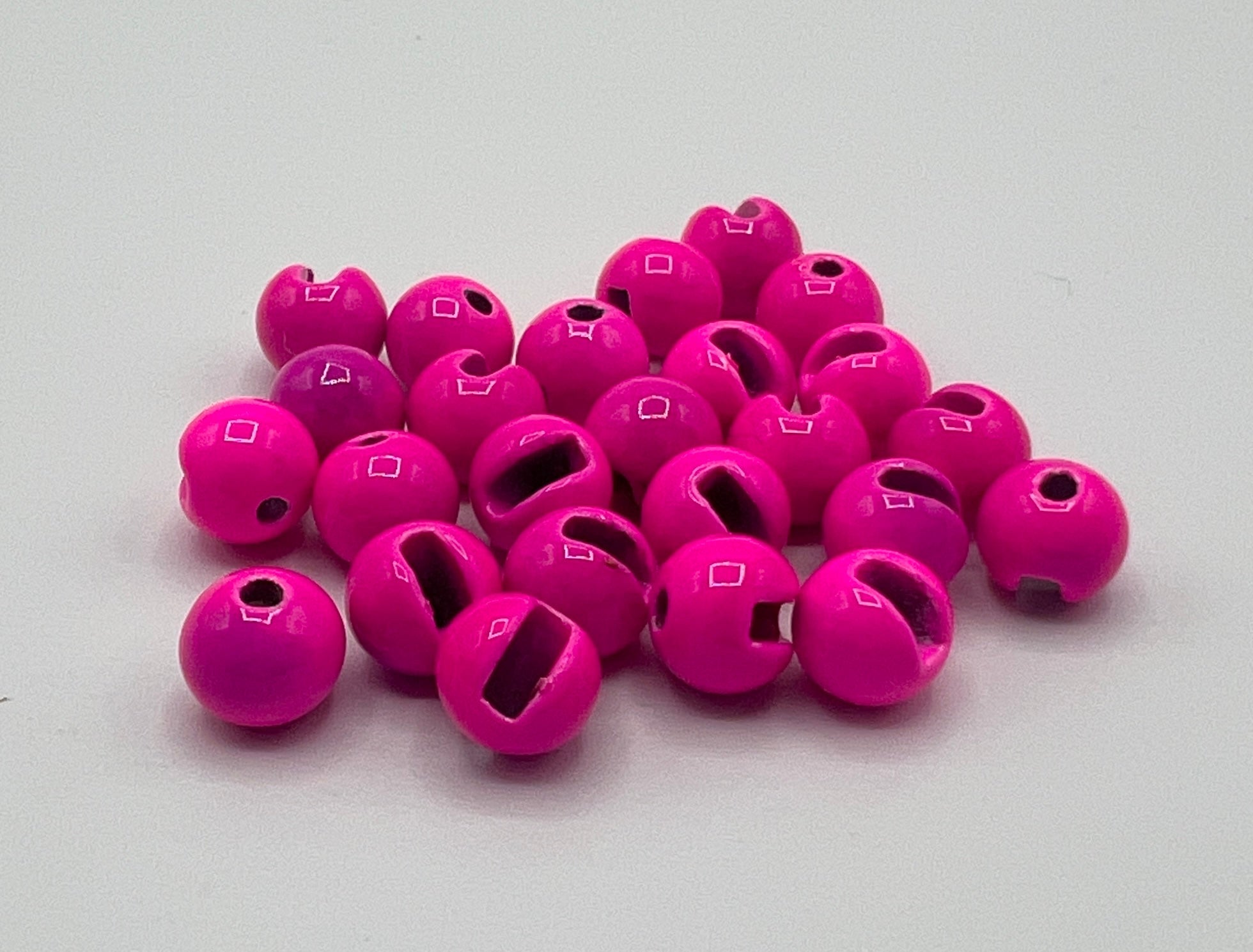
| Heavier flows or deeper water | Medium lead dumbbell eyes | Gets down fast. Lift the instant the fly lands. |
| Bright sun, very clear water | Matte black bead chain | Eric Leininger dropped shiny eyes because flash on the fall spooked fish. |
Two tying details from our guests are worth copying. Matt said bead chain helps the hook ride point-up so it doesn't snag the bottom. Eric trims the hackle under the eyes so the fly lands upright like a little tripod instead of falling on its side. For dirty water, Nic switches to chartreuse, and we cover dirty-water carp in its own guide in this series.
What Are the Most Common Drag-and-Drop Mistakes?
The most common drag-and-drop mistakes are setting too early, dragging the fly straight at the fish, and landing the fly line on the carp. Here are the ones I see most.
- Snagging fish with a drifted rig. That's Nic Hall's big warning. An indicator rig drifting through a seam tends to foul-hook carp as they dodge it. Foul-hooked fish don't even count at Denver Trout Unlimited's Carp Slam, where Nic told us on episode 265 that fish must be hooked in the mouth.
- Setting on the tilt. A carp tipping down is interested, not hooked. Set too early and you'll pull the fly away or stick the fish in the side.
- Casting too close or dragging at the face. Land past the fish and drag across its path.
- Lining the fish. If the fly line lands over its back, it's gone. Shorten up or reposition.
- Stripping along the bottom after the drop. Eric noted that bottoms that look like bare mud often hold weeds. Your fly comes back covered in weeds, and the carp won't eat it.
- A big trout-set with lots of line out. Nic said a lift works from a high bank with little line out, but with line on the water, you only lift slack.
When Doesn't the Drag-and-Drop Fit?
The drag-and-drop doesn't fit every carp situation. I switch approaches in these spots:
- Fast current. The fly gets swept away the moment you drop it. Cast farther upstream with a heavier fly and let the current carry it down so it reaches the bottom in front of the fish.
- Carp mudding in deeper water. A surface drag buys little when the fly needs time to sink. Use a heavier fly and drop it straight into the mud cloud. Nic said a carp with its face buried in the bottom isn't watching you, so you can often get close.
- Fast-cruising pods. Eric said schools cruising with somewhere to go rarely eat.
- Long shots. Past about 35 feet, the drag gets sloppy. Close the distance first.
- Wind chop, bad light and grass carp. If you can't see the head, you can't time the drop. And grass carp (Ctenopharyngodon idella) feed differently, so check our grass carp guide in this series first.
How Do You Practice the Drag-and-Drop Before You Fish?
You practice the drag-and-drop in a park with the exact fly you'll fish, hook point snipped off. In one of our Shorts with Nic Hall, the advice was to skip the yarn, because a dumbbell-eye fly casts completely differently. Use the same line and leader, and clip the point so you don't hook a person, a tree or the lawn. A split shot works in a pinch.
- Set out paper plates at 20, 25 and 30 feet. Each one is a carp's head.
- Cast 3 feet past a plate, then lift, drag across its line and stop about 6 inches off one side.
- Drop the rod tip, then check where the fly landed. Do ten reps from each side, with no more than two false casts per rep.
- Time your sink rate on your next trip. Drop each fly in clear, shallow water near the bank and count to the bottom.
It's like shooting free throws in the driveway. You don't want to be learning your shot in the fourth quarter, or learning rod-tip timing with a big carp tailing 25 feet away.
Count the drop out loud. Once you know your fly takes about three counts to hit bottom in that water, you stop guessing and start timing the drop to the fish. For a slowly moving carp, drop a little early so the fly lands just as the fish arrives. We break down that timing in where to put the fly for cruising carp.
Flies and Gear That Make the Drop Work
The best flies for the drag-and-drop are small, buggy patterns with enough weight to fall quickly and a hook that rides point-up. The Reddit thread named well-known patterns we don't carry, like the Backstabber and John Montana's Hybrid. They're great flies, so fish them if you find them. From our shop, here's what I'd carry. For more, see the carp fly box and our carp fly rod setup guide.
Rachel, one of our longtime community members, keeps her drag-and-drop box simple: one nymph, one soft hackle and one crayfish. She says it lets her focus on the presentation.


Frequently Asked Questions
What is the drag-and-drop technique in carp fly fishing?
The drag-and-drop technique is a carp presentation where you cast past a feeding fish, lift your rod to skate the fly into its path, then lower the rod tip so the fly sinks beside the carp's head. The splash stays away from the fish, but the fly still ends up inches from its face.
How far past the carp should I cast for the drag-and-drop?
Cast about 1 to 3 feet past a tailing carp and about 3 to 5 feet past a slowly moving one. Farther is fine if you can still control the drag, as long as your fly line doesn't land on the fish.
Should I strip set or trout set on carp?
Strip-set on carp in most drag-and-drop situations, because a strip keeps the rod low and doesn't just lift slack. Matt Martin noted that if you miss, a strip moves the fly only a few inches, so the fish may eat again. A trout-style lift works when the fish is right under your rod tip.
How do I know a carp ate my fly?
You usually see a carp eat rather than feel it. Watch for the fly disappearing, the mouth opening, the gills flaring, or a fresh puff of mud where the fly landed. A tilt by itself isn't an eat.
Does the drag-and-drop work in rivers?
Yes, the drag-and-drop works in slow to moderate river water, and Nic Hall uses it on Denver's South Platte. In fast current, cast farther upstream with a heavier fly instead.
What rod weight do I need for the drag-and-drop?
Most carp anglers fish the drag-and-drop with a 6- to 8-weight rod. Nic Hall recommended a 6- or 7-weight, because a big carp on a light trout rod usually ends up as a lost fish.
Go Drop One on a Carp
The drag-and-drop feels awkward for about an afternoon, then it clicks. Find a feeding fish, cast past it, drag across its path, drop the fly beside its head and wait for the fly to disappear. That's a big part of how we help anglers catch any fish, any time, and anywhere. Next, take your placement further with how to cast to cruising and tailing carp, brush up on which carp are worth casting to, or head back to the complete beginner's guide.
Tight lines, everyone!
Next in the series: Where to Put the Fly and Reading Carp Behavior. Join the FFIP Insiders for gear deals, trip intel and more carp tactics.
Join freeShow us your carp on Instagram @flyfishinginsiderpodcast