
Carp fly fishing for beginners comes down to one shift: you're hunting, not blind casting. Find common carp feeding in shallow water, sneak within 30 feet, drop a small weighted fly a foot or two from the fish's head on a 6- or 7-weight rod with fluorocarbon tippet, watch for the eat, and set. And yes, it's completely mainstream.
A while back I read a Reddit thread that stuck with me. A brand-new angler was fishing semi-clear and brackish water, the nearest fly shop was an hour away, and when they asked about carp flies at the local tackle store, they got the kind of look you'd get for asking a steakhouse for tofu. Their real question was simple: is fly fishing for carp even a thing, or am I crazy?
You're not crazy. You're early. I've spent about 25 years chasing fish with a fly rod, and some of the most heart-pounding sight fishing I've done has been for a big golden carp tipped down on a shallow flat. Carp come up again and again on the Fly Fishing Insider Podcast, and for good reason. They live almost everywhere, they grow big, and they'll make you a better angler.
This is the hub of our Carp on the Fly series. Ten guides, one goal: your first carp on a fly rod. Read this one first, then work outward with reading carp behavior and the drag-and-drop method.
Denver urban angler and guide Nic Hall walked me through how he got hooked on carp, how he finds them in city water, and the exact setup he fishes. Episode page.
- Carp on the fly is mainstream. Carp are the UK's most popular angling target, and U.S. fly anglers have built tournaments and clubs around them.
- Only cast to feeding fish. A carp with its head down and tail up is your best shot.
- Start with a 9-foot 6- or 7-weight. Pair it with a weight-forward floating line, a 9-foot leader and 2X to 3X fluorocarbon tippet.
- Presentation beats pattern. A small weighted fly dropped quietly into the feeding zone beats the perfect fly landed on a carp's back.
- Count shots, not fish. Dozens of presentations for a handful of eats is normal.
Is Fly Fishing for Carp Actually a Thing?
Fly fishing for carp is absolutely a thing, and it has been for decades. In the United Kingdom, carp are the headline act: the Angling Trust notes that more UK anglers chase carp than any other fish, and nearly every coarse fishery there is stocked with them. Most of that is bait fishing, but it tells you how seriously the rest of the world takes this fish.
Here in the U.S., the fly side has its own history. Barry Reynolds, Brad Befus and John Berryman published Carp on the Fly back in 1997, and Kirk Deeter later wrote The Orvis Guide to Fly Fishing for Carp. Nic Hall told me on episode 229 that he started carping before he read the Reynolds book, made a lot of mistakes, and wishes he'd read it first. Denver Trout Unlimited runs the Carp Slam, a pro-am fly tournament on the South Platte.
If the big-box counter looked at you funny, that's on the counter, not you.
Why Are Carp Worth Chasing on a Fly Rod?
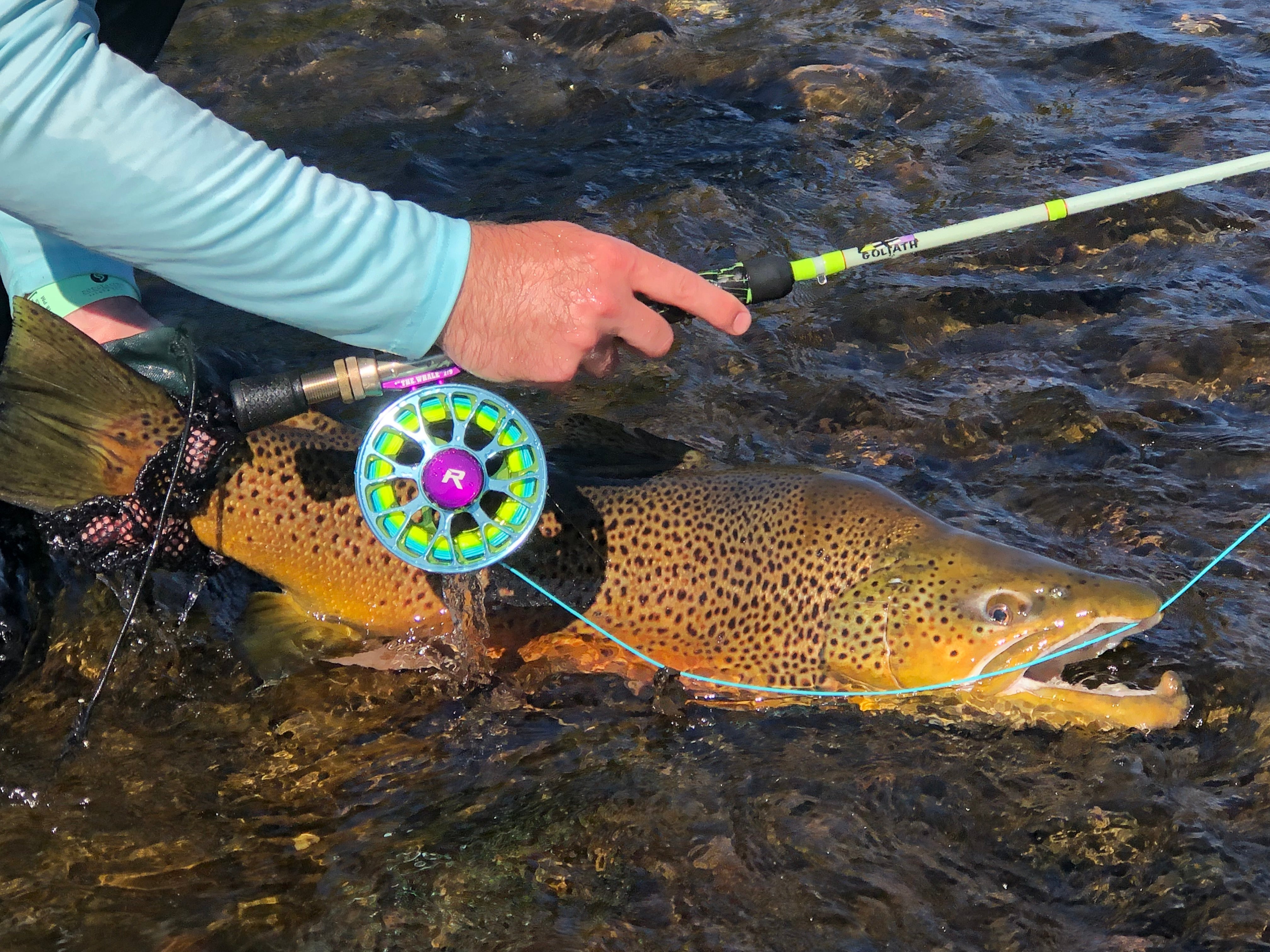
Carp are worth chasing on a fly rod because they combine three things you rarely get in freshwater: sight fishing in shallow water, real size, and a fight that takes you into your backing. Matt Martin, who fishes the Great Lakes in Ontario, explained on episode 117 of the Fly Fishing Insider Podcast that some anglers call them golden bones, and that his local fish can top 30 pounds while cruising water barely over a foot deep. That's why you'll hear carp flats called the freshwater version of a bonefish flat.
Think of it like golf. Bonefish are the private club with the expensive flights and lodges. Carp are the public course ten minutes from your house. Same skills, a fraction of the cost.
- They're everywhere. Common carp live in lakes and rivers across the United States.
- They pull. Matt said even a 5- or 6-pound fish in open water surprises people on a 7- or 8-weight.
- They teach you. Spotting, stealth and accuracy transfer straight to trout and saltwater flats.
What Are Common Carp, and What Do They Eat?
Common carp (Cyprinus carpio) are large, bottom-feeding members of the minnow family, native to Europe and Asia and introduced to the United States in the 1800s. According to Pennsylvania Sea Grant, their native range centers on the Danube River drainage, and by 1885 the U.S. Fish Commission was actively stocking lakes and rivers across the country. Here in Utah, carp were introduced to Utah Lake by the federal government as a food source in the late 1800s.
Carp are omnivores that root for food on the bottom. They eat insect larvae, worms, snails and other mollusks, crustaceans and zooplankton, plus aquatic plants and seeds. The Chesapeake Bay Program describes how they suck up mouthfuls of mud, spit it back out and pick off the food as it drifts. That silt cloud is what you'll learn to look for, and it's why drab, buggy flies work.
| Trait | Common carp (Cyprinus carpio) | What it means for you |
|---|---|---|
| Native range | Europe and Asia | Introduced; check your state's rules on carp |
| Feeding style | Roots in soft bottoms; two pairs of barbels on the upper jaw | Look for mud clouds and tipped-down fish |
| Diet | Insect larvae, worms, mollusks, crustaceans, plants | Small, dark, weighted flies in sizes 6 to 10 |
| Typical size | About 1 to 10 pounds; much larger fish exist | A 6- or 7-weight covers most water |
| Lifespan | Up to about 50 years | Big fish are old, wary fish, so release them well |
| Water | Ponds, lakes, slow rivers; tolerates slightly brackish water | Your local water probably has them |
One note: grass carp (Ctenopharyngodon idella) are a different, mostly plant-eating species from eastern Asia, covered in grass carp vs. common carp. This guide is about common carp.
Where Do You Find Carp to Fly Fish For?
You find carp to fly fish for in almost any warm, slow, fertile water: city ponds, reservoirs, canals, slow river edges and shallow flats. The best spots have soft, buggy bottoms, shallow water that warms quickly, and enough clarity to see the fish.
Nic Hall treats a city like a treasure map. Before he heads out, he checks USGS stream gauges for water temperature and flow. He told me that once his urban river climbs past roughly 150 to 200 cubic feet per second, runoff muddies it, so he looks for slower, cleaner stretches, often just below a confluence. It's a habit worth stealing in any city, and our Denver urban fishing breakdown covers more of his approach.
- Urban ponds. Smaller fish, lots of them, and a perfect classroom.
- Reservoir flats. Shallow, sunny bays you can wade. That's where I carp fish in Utah; see carp fly fishing in Utah.
- Rivers. Slack edges, eddies and seams where carp let food come to them.
- Brackish and murky water. Carp tolerate slightly brackish water, and you can catch them even when you can't see them. See catching carp in murky and brackish water.
When Is the Best Time to Fly Fish for Carp?
The best time to fly fish for carp is on sunny, calm days from spring through early fall, when fish move into shallow water to feed and you can actually see them. Common carp typically spawn when the water is between 65 and 75 degrees Fahrenheit, according to the Florida Fish and Wildlife Conservation Commission, which in much of the country lands somewhere between late spring and early summer.
Actively spawning carp splash and chase each other in the shallows and mostly ignore food. Matt Martin's advice was not to waste casts on them and instead to work the edges, where you'll find fish staging before the spawn or recovering after it that still want to eat. That lines up with how Nic got hooked: a buddy took him to the South Platte over Father's Day weekend during the spawn, with tails and backs breaking the surface everywhere, and the two of them landed around 20 carp in two days. Nic was using 5-weights at the time, so his buddy lent him a 6- or 7-weight.
| Season | What carp are doing | What to do |
|---|---|---|
| Early spring | Moving shallow as water warms on sunny afternoons | Fish the warmest, shallowest bays |
| Late spring to early summer | Staging, spawning, recovering | Skip spawners; target feeders on the edges |
| Summer | Feeding hard in shallow water; may slide deeper in peak heat | Fish mornings and sunny, calm windows |
| Fall | Feeding before winter | Great sight fishing; crayfish and leeches shine |
Weather matters as much as the calendar. Nic says overcast days are really hard, since carp become golden ghosts in the glare. Sun at your back, polarized glasses on, light wind. That's a carp day.
What Gear Do You Need to Start Fly Fishing for Carp?
You need a 9-foot 6- or 7-weight rod, a reel with a smooth sealed drag and at least 100 yards of backing, a weight-forward floating line, a 9-foot leader with 2X or 3X fluorocarbon tippet, a handful of small weighted flies, and polarized sunglasses. Many trout anglers already own half of it.
Can you use a 5-weight? On a neighborhood pond full of 3- and 4-pound fish, Matt Martin says a 5-weight is more than enough. Nic joked that you can fish a 5-weight if you like replacing rods; he fishes a 7-weight with a large arbor, sealed-drag reel. Matt, chasing 20- and 30-pound fish on windy Great Lakes flats, calls a 9-foot 8-weight his best all-around rod.
I go deep on every piece of that in our carp fly rod setup guide, including why fluorocarbon earns its place. If you're brand new to fly gear in general, start with our beginner gear selection guide.
Which Flies Should a Beginner Carry?
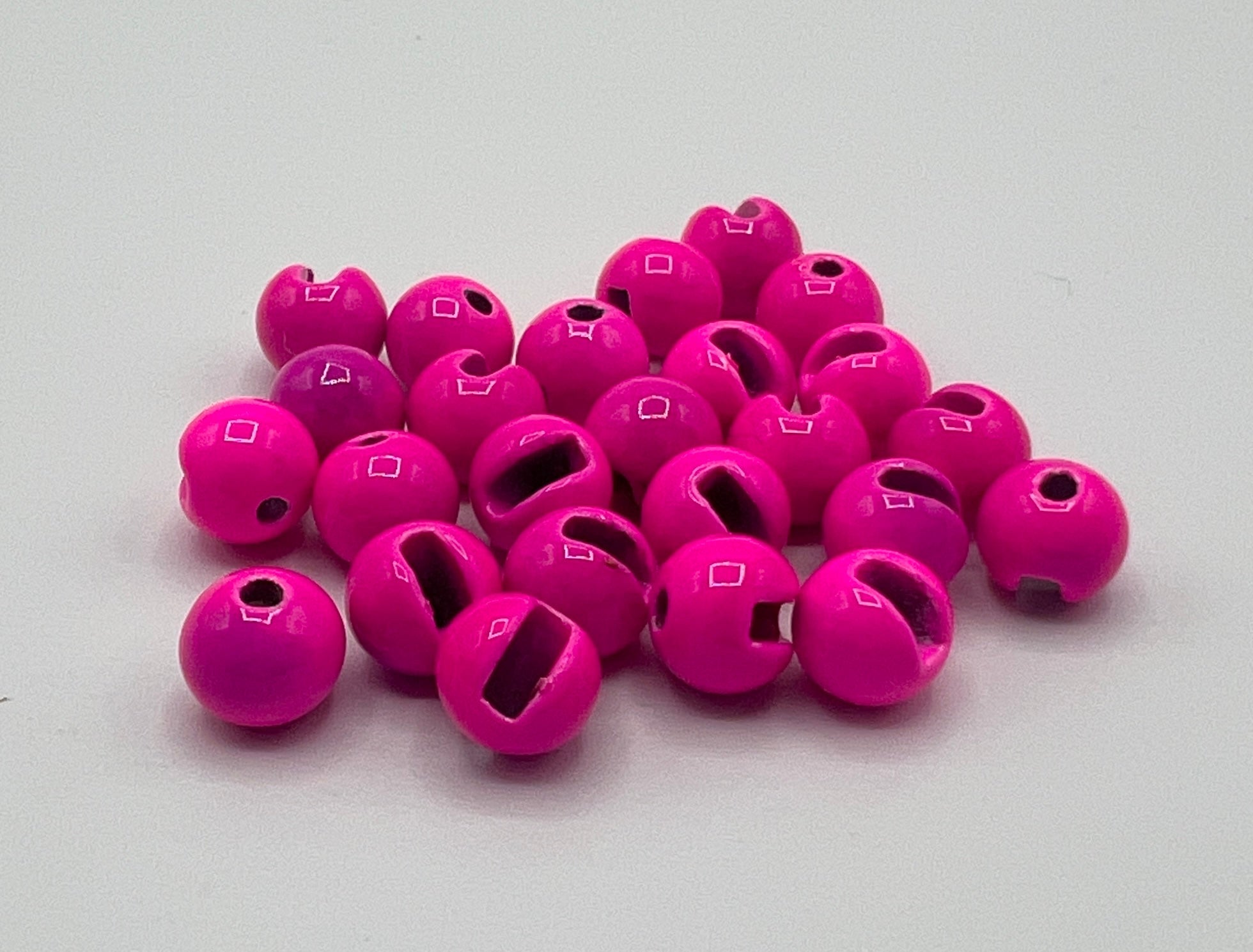
Carry a small box of dark, buggy, weighted flies in sizes 6 to 10: a crayfish, a leech, a soft hackle, a swimming nymph and a Woolly Bugger will cover most days. Famous carp-specific patterns include Jay Zimmerman's Backstabber and Lance Egan's Headstand, which Egan designed for sight fishing to carp with just enough weight to sink slowly and flip the hook point up.
Color is about contrast. Nic likes black, olive and rust because both you and the fish can see them against the bottom. In murky water he switches to chartreuse. My full breakdown, with what to tie on first, lives in the carp fly box.
Get the whole carp series in your inbox
Join the FFIP Insiders for new carp guides, episode drops and gear deals. Free signup on our homepage.
Sign up freeHow Do You Catch Carp on a Fly Rod? Here's How I Actually Do It
You catch carp on a fly rod by spotting a feeding fish, sneaking into range, and putting a slowly sinking fly into its feeding zone without spooking it, then setting the hook the moment the fish eats. Simple, not easy. Here's my sequence.
- Spot before you cast. Walk slowly and scan for shapes, tails and mud clouds. Matt Martin keeps the sun at his back, even though it throws his shadow forward, because his polarized glasses see much farther that way.
- Read the fish. Nic sorts carp into three groups: cruisers moving from point A to point B, tailers with their heads down in the mud, and clooping fish sipping at the surface. Tailers are his favorite because they're eating and focused. Full guide: which carp to cast to.
- Approach like a heron. Slow steps, low profile, no wake. Carp feel vibration through their lateral line and hear well, so one clunky step can clear a flat. Luke Annear, a dedicated carp guide, built episode 171 around exactly this: silence your approach and target the feeding zone.
- Make one short, accurate cast. Most of my shots come inside 30 feet. Keep false casts to a minimum and never line the fish.
- Drag and drop. Cast a few feet past the fish, lift the rod to skate the fly back along the top, and drop the tip when it reaches the feeding zone so the fly sinks right in front of the fish's face. Step-by-step: the drag-and-drop method. For moving fish, see leading cruisers and spotting the eat.
- Watch for the eat. You'll rarely feel it. The fly disappears, or the fish tips down or pauses over the spot.
- Set, then let it run. Nic uses a strip set when he has more line out and a straight lift when he's high-banking with only a little line past the tip. Once it's on, get line on the reel and let the drag do the work.
My buddy Todd learned this the hard way on a Utah reservoir flat. His first morning he cast to everything that moved and spooked all of it. The next weekend he walked past every cruiser and cast only to tailing fish. Eight casts, three hooked. Same flat, same fly, different angler.
What Separates Good Carp Anglers From Frustrated Ones?
Good carp anglers are selective, patient and accurate; frustrated ones cast at every fish they see. A few habits make the difference.
Practice your 30-foot cast in the backyard before you ever see a carp. Lay a paper plate on the grass and try to hit it on the first delivery with two false casts or fewer. When a big fish tips down in front of you, your hands will do what they practiced.
- Pick your weather. Plan carp days around sun and light wind, and fish something else when it's gray. I cover this mindset in why carp are the hardest fish worth chasing.
- Tighten your drag in rivers. Nic keeps his drag fairly tight on moving water because hooked carp bolt downstream and will drag you through obstacles.
- Sharpen hooks and casts. Carp mouths are tough, so touch up your hook after every snag, and warm up with our 8-step guide to better fly casting.
Read up before your first carp trip, not after. Nic Hall told me on episode 229 that he started chasing carp before he had studied them, and he spent a lot of frustrating days foul-hooking fish on trout-style indicator drifts. His fix is the one I would give you: learn how carp feed, move and spook, watch a few drag-and-drop videos, and find local carp anglers before you make your first cast.
How Should You Handle and Release a Carp?
You should handle a carp with wet hands, keep it in or close to the water, and support its body with one hand under the belly near the pectoral fins and the other near the tail. The Virginia Department of Wildlife Resources sums up good catch and release practice well: wet your hands, use a soft rubber net, keep photos quick, and let the fish swim off on its own terms.
- Unhook fast. Forceps make quick work of a thick carp lip.
- Hold it low and level over the water in case it kicks.
- Revive it facing gentle current until it swims off strongly.
- Know your local rules. Carp and especially grass carp regulations vary by state, so check before you release.
What Beginner Mistakes Should You Avoid?
- Casting to fish that aren't eating. Cruisers and sunbathers are tempting and almost never worth it.
- Landing the fly on the fish. A weighted fly plopped on a carp's head ends the conversation.
- Too many false casts. Every one waves a shadow and a line over the flat.
- Stripping like it's a trout streamer. Carp mostly want a fly that sinks and sits, with a tiny twitch at most.
- Setting on feel instead of sight. By the time you feel it, the carp has usually spat the fly.
- Giving up after one trip. Everybody gets skunked early. Everybody.
What If You Don't Have a Fly Shop Nearby?
If you don't have a fly shop nearby, a general tackle store can cover your tippet and basic tools, and you can order carp flies online. Tippet X sizes are really diameters, so read the label: 2X runs about .009 inch and 3X about .008 inch, and a spool of fluorocarbon line near those diameters will do the job. Pound-test ratings vary by brand.
Big-box stores rarely carry carp flies, which is why we stock carp-friendly patterns in our fly patterns collection and ship them to your door. A buddy of mine lives two hours from the nearest shop, restocks his crayfish and leech patterns by mail, and out-carps plenty of anglers who live next door to one.
The Beginner Carp Kit I'd Buy Today
If a friend asked me what to buy to start fly fishing for carp this weekend, this is the short list I'd send them.


- Genesis Fly Rod — 9-foot 7-weight for most carp water
- Fly Line Combo — floating line, backing and leader in one
- Fluorocarbon Tippet Spools — 3X for clear water, 2X around cover
- Crayfish — dumbbell-eyed #6/#8 bottom bug
- Carp Soft Hackle — the burnt-orange Carp Carrot in size 6
- Diamond File — keeps hook points sharp for tough carp mouths
- Brookie Net — gentle, quick landings
- Carp on the Fly: The Complete Beginner's Guide (you are here)
- The Drag-and-Drop Method for Carp, Step by Step
- The Carp Fly Box: Patterns That Actually Get Eaten
- Reading Carp Behavior: Which Fish to Cast To
- Carp Fly Rod Setup: Rod, Line, Leader and Why Fluorocarbon
- Where to Put the Fly: Leading Cruisers, Head-On Shots and Spotting the Eat
- Grass Carp vs. Common Carp on the Fly
- Catching Carp You Can't See: Murky, Brackish and Off-Color Water
- Carp Fly Fishing in Utah: Where and When
- Patience and Carp: Why They're the Hardest Fish Worth Chasing
Frequently Asked Questions
Is carp fly fishing good for beginners?
Carp fly fishing is great for beginners because carp live close to most people, feed in shallow water where you can see them, and teach spotting, stealth and accurate casting fast. Expect some tough days early.
What weight fly rod is best for carp?
A 9-foot 6- or 7-weight fly rod is the best all-around choice for carp. Go lighter for small pond fish and step up to an 8-weight for big fish or windy flats.
What is the best fly for carp?
The best carp fly is a small, dark, weighted pattern that sinks slowly into the feeding zone, such as a crayfish, leech, soft hackle or swimming nymph in sizes 6 to 10.
Why are carp called golden bonefish?
Carp are called golden bonefish, or golden bones, because fly anglers stalk them on shallow flats the same way saltwater anglers stalk bonefish and a hooked carp runs hard into the backing.
When do carp spawn?
Common carp typically spawn when water temperatures reach roughly 65 to 75 degrees Fahrenheit, often late spring into early summer. Spawning carp rarely eat, so fish the edges.
That's the foundation. Pick one local pond or flat, go on the next sunny, calm day, and give yourself permission to spook fish. Then move on to reading carp behavior so you know which fish deserve your cast, and the drag-and-drop method so your fly lands where it counts. I love hearing about first carp, so send me yours.
Tight lines, everyone!
Next in the series: Reading Carp Behavior. Join the FFIP Insiders for gear deals, trip intel and tactics to help you catch any fish, any time, and anywhere.
Join freeShow us your carp on Instagram @flyfishinginsiderpodcast