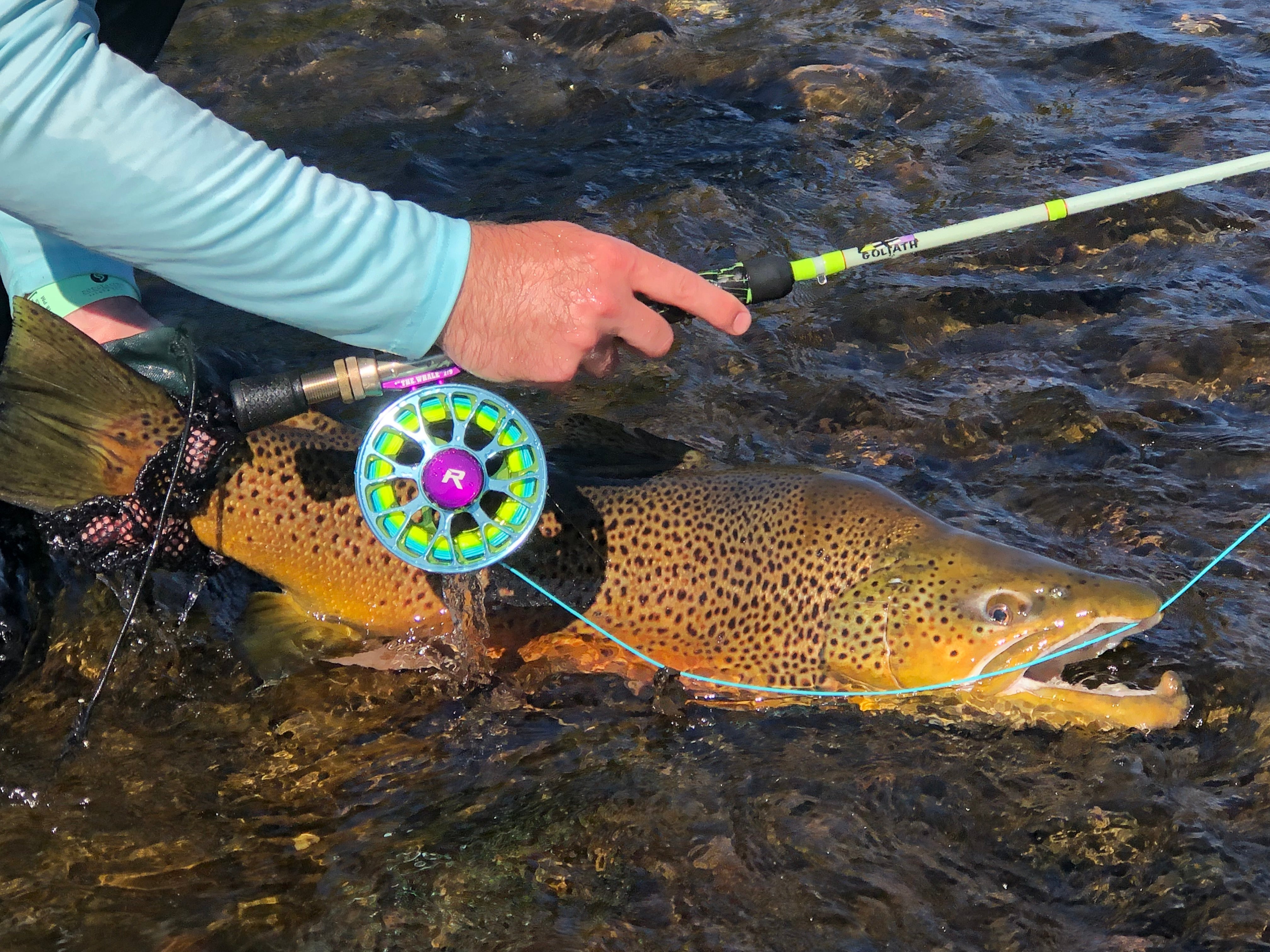

The best carp fly fishing tips all come back to patience. Carp are hard to catch on the fly because they feel vibration through their lateral line, hear unusually well, spook as a group, and give you only seconds to present. Pick sunny, calm days, cast only to feeding fish, and measure your day in good shots, not fish landed.
Picture it. You've crept 200 yards down a Utah reservoir flat with the sun at your back. There's a big golden carp 35 feet out, head down, tail waving, a little plume of mud drifting off its face. You've got the right fly on. Your loop is ready. And just as you start your cast, a carp you never saw, 50 feet to your left, bolts. It rockets straight through the fish you were about to cast to, and in two seconds the whole flat is empty.
If that's happened to you, welcome. It happens to me more than I'd like to admit, and it happens to every guide and serious carp angler I've talked to on the Fly Fishing Insider Podcast. Carp don't just test your casting. They test your temperament. The good news is that patience isn't a personality trait you either have or don't. It's a set of habits, and I'm going to hand you mine.
Part of our Carp on the Fly series. New to carp? Start with the beginner's guide, then come back here when the fish start winning.
Eric Leininger, owner of Fly Fish Portland and a former Alaska guide, told me why his carp days on the Columbia River are tougher than his redfish days, and how he chooses what to fish by the weather. Episode page.
- Carp are built to detect you. A lateral line, sensitive hearing and schooling behavior mean one mistake can clear a flat.
- Choose carp days by weather. Sun and light wind make carp; gray, humid days are for another species.
- Count shots, not fish. Track fish spotted, clean presentations and eats, and you'll see progress long before your catch rate shows it.
- Build a reset routine. After you spook a fish, stand still, watch where the fish go, and fix one thing before the next cast.
- Learn with other anglers. Clubs and events like Denver's Carp Slam shorten the learning curve.
Why Are Carp So Hard to Catch on the Fly?
Carp are hard to catch on the fly because they're wary, sensory-rich bottom feeders that spook as a group and feed in a tiny window. Common carp (Cyprinus carpio) belong to the minnow family, and they pick up a clumsy angler in several ways at once.
First, there's the lateral line, the row of pressure-sensing organs down each side of a fish. Matt Martin, who chases big carp on the Great Lakes, told episode 117 of the Fly Fishing Insider Podcast that carp have a very strong lateral line. Every heavy wading step, every slap of fly line, sends a pressure wave their way.
Second, carp hear better than most fish you chase. Carp and minnows belong to a group called Ostariophysi, which carries a chain of tiny bones called the Weberian apparatus. As Britannica explains, those bones link the swim bladder to the inner ear and enhance hearing. Crunching gravel, a dropped fly box, a boat hull knock: they notice. Nic Hall, the Denver guide, told me carp have really good eyesight and really good hearing, which is why he loves fish that are buried face-down in the mud and too busy to notice him.
Third, carp live in groups, and panic spreads. Matt described how when one fish spooks, the whole group goes with it. Eric Leininger put it even more painfully: you can do nothing wrong at all and a fish 50 feet away spooks, then runs straight into the fish you were targeting and spooks it too.
Fourth, the window is tiny. Eric has noticed that the Columbia River carp he fishes sense food and root it up in under about 10 seconds, so your fly has to be there now, not after three more false casts. Nic adds that carp are opportunists. Where a trout might move a couple of feet for a fly, a carp usually won't, so presentation carries the whole load.
| What carp sense | What spooks them | What you do about it |
|---|---|---|
| Pressure and vibration (lateral line) | Heavy wading, wakes, line slapping the water | Slow, sliding steps; soft landings; stop moving when fish are close |
| Sound (Weberian apparatus) | Crunching gravel, knocking a boat, rattling gear | Quiet shoes and hull; nothing loose in your pockets |
| Sight | Shadows, rod flash, fly line over their backs | Sun angle, low profile, lead the fish instead of lining it |
| Group alarm | One fish bolting through the rest | Scan wide before you cast; pick singles and edge fish |
| Feeding window | A fly that arrives late or lands too far off | One or two false casts, then deliver |
Are Carp Really Harder Than Redfish?
Carp are harder than redfish on many days, according to anglers who chase both. Eric Leininger told me flat out that his days carp fishing had been far harder than his days redfishing. He wasn't bragging, either; he'd happily take easier days. He called redfish about the friendliest saltwater training ground there is, and pointed out that if you can't get to Louisiana, a hot, sunny day on your local carp water will sharpen the same skills.
Nic Hall drew the same line from a different angle. A redfish that wants to eat, he said, is going to eat. With carp, you have to earn it, and you have to see the take to set the hook. Matt Martin went further: he said presenting to 30 or 40 carp in a day for maybe a single take is normal, even for a good angler. To him, carp are a worthy opponent that has earned his respect, and that's the right mindset.
Here's the thing. That's not a reason to avoid carp. It's the reason to chase them. A fish that forgives every mistake teaches you nothing. A carp grades every step, every cast and every set, right there in front of you.
Why Is Learning Carp Like Learning Golf?
Learning carp is like learning golf because both punish you for showing up unprepared, and both reward practice and good instruction. Nic Hall made this comparison on episode 229. He started carping before he'd read up on it, got frustrated, and compared it to heading out for a round with no lessons: you play badly once and decide you hate the game. Once he studied how carp eat and move, everything changed, the same way one golf lesson straightened out his swing.
I love that analogy because it goes further. Golfers don't judge a round by one shot. They keep a scorecard, they have a pre-shot routine, and they know that a bad hole doesn't have to become a bad round. Every one of those ideas works on a carp flat, and the rest of this article borrows them shamelessly.
How Do You Pick a Good Carp Day?
A good carp day is sunny and calm, with light wind and water clear enough to see fish. Eric Leininger builds his whole schedule around this. When he looked at the forecast and saw an overcast, humid day, he told me, he and his clients would skip carp and go fish a mayfly hatch on a trout river instead. A showery, cloudy day meant chasing salmon or steelhead. A forecast of full sun and light winds meant carp.
His bigger point stuck with me: most so-called bad weather is only bad for the fish you were trying to catch. Pivot to the species the weather favors and you'll usually have a good day. Nic Hall agrees from the carp side. He told me overcast days make carp really hard to find, and he watches weather windows closely.
| Conditions | Carp day? | What I'd do instead |
|---|---|---|
| Full sun, light wind | Yes, the best | Carp all day; start when the sun gets high enough to cut glare |
| Sun with gusty wind | Maybe | Hunt sheltered bays and lee shorelines |
| High thin clouds | Tough | Fish short windows when the sun pokes through |
| Overcast, humid | Usually no | Fish a hatch or swing streamers for trout |
| Rain or high, muddy water | No for sight fishing | Try a different fishery or a murky water approach |
Here in Utah, that means I keep a trout plan in my back pocket every time I head to a carp flat. If the clouds roll in, I'd rather catch trout than spend four hours staring at glare and blaming myself.
Tactics for the tough days
Join the FFIP Insiders for new carp guides, guest insights from the podcast and gear deals. Free signup on our homepage.
Sign up freeStay for the last ten casts. One of my favorite closing tips came from a smallmouth guide on the rivers around Milwaukee: on pressured water, the bite window can shift by hours with no obvious pattern, so plan for a full day instead of a short session and treat a slow stretch as normal. He was talking about bass, but carp run on the same unpredictable clock, and time on the water is the one lever you actually control.
What Does It Mean to Count Shots, Not Fish?
Counting shots, not fish, means judging a carp day by how many good chances you created and how well you used them, instead of only by fish landed. A shot is a feeding fish you spotted, approached and presented to before it spooked. Fish landed depend on a hundred things you can't control. Shots depend mostly on you.
Think of it like a golfer tracking fairways hit and putts per hole. The score matters, but the stats tell you why. On a carp flat, I track a simple ladder:
- Fish spotted. Did you see them before they saw you?
- Shots taken. Feeding fish you got into range on without spooking.
- Clean presentations. The fly landed where you meant, with no lined fish.
- Reactions. The fish tipped, turned or tracked the fly.
- Eats and hooksets. Did you see the take and connect?
- Fish landed. The bonus, not the benchmark.
My friend Rachel started doing this after a spring of blanks that had her ready to give up on carp. She kept a small notebook in her chest pack and tallied each rung. By midsummer she noticed that her spotted-to-shots number had climbed, but her clean presentations hadn't, because she was rushing the cast. She spent two weeks practicing 30-foot deliveries in a park, and her eats followed. The fish didn't change. Rachel did.
How I Actually Prepare: My Carp Pre-Trip Checklist
Most blown shots start before you ever reach the water. Here's the checklist I run the night before and the morning of a carp trip.
- Check the sky. Sun, cloud cover and wind for the hours you'll fish. If it's gray, switch plans.
- Check the water. Nic Hall looks at USGS stream gauges for flow and temperature before heading out, and on his urban river, high flows mean muddy water.
- Plan the sun angle. Pick a route that keeps the sun behind you for as long as possible.
- Dress for stealth. Muted colors, a brimmed hat, clean polarized sunglasses and quiet wading shoes.
- Rig at home. Fresh tippet, retied knots and a leader you trust. See our carp rod setup guide.
- Sharpen every hook. Carp mouths are tough, and a slightly dull point costs you the one eat you earned.
- Carry two weights of the same fly. One sinks fast for deeper fish, one slow for skinny water.
- Make ten practice casts. On grass or an empty stretch of water, before you start hunting.
- Pack your log. A notebook or a phone note, ready to fill in.
How Do You Keep a Carp Fishing Log?
You keep a carp fishing log by writing down, right after each outing, the conditions, what the fish were doing, what you threw and what happened on each shot. Five minutes in the truck is enough. Over a season, patterns jump off the page that you'd never remember otherwise.
| Log field | Example entry | Why it matters |
|---|---|---|
| Date, time, location | July, 10 a.m. to 1 p.m., north bay | Carp use the same flats at similar times |
| Light and wind | Full sun, 5 mph breeze | Shows your best viewing windows |
| Water | Clear, warm, low | Links clarity and temperature to fish behavior |
| Fish behavior | Mostly cruisers early, tailers after 11 | Tells you when to hunt and when to wait |
| Fly and weight | Dark leech, bead head | Builds your own confidence list |
| Shot ladder | 14 spotted, 6 shots, 4 clean, 2 eats, 1 landed | Shows where your day actually broke down |
| One lesson | Rushed the cast on two fish | Gives you one thing to fix next time |
The one-lesson line is the most important. Don't write a novel. Write one fix. Next trip, work only on that.
What Should You Do After You Spook a Carp?
After you spook a carp, stop moving, stay quiet and let the flat settle before you take another step. Matt Martin's advice was blunt: sometimes you have to stand still for 15 to 20 minutes and let the fish reset without taking a single step. Most of us, me included, want to chase the next fish immediately. That's how one spooked carp becomes ten.
Here's my reset routine, borrowed straight from the golf course:
- Freeze and breathe. Three slow breaths. Your heart rate matters more than you think when the next fish shows up.
- Watch where they go. Matt noted that moving fish often lead you to others that are actively feeding.
- Name the cause. Was it your shadow, your wake, a false cast or bad luck? Say it once, then drop it.
- Reset your gear. Check the fly, straighten the leader, strip in your line and get the fly back in your hand.
- Pick one fix. Slower steps, one fewer false cast, a longer lead. Apply it on the next shot.
You don't lose a carp day on the first spooked fish. You lose it on the fifth, when frustration makes you rush. Every blown shot is information. Log it, breathe, and let the flat reset. The patient angler usually gets the last good shot of the day.
My buddy Dave has a rule I love: after two spooked fish in a row, he sits down on the bank for five minutes. No casting, no walking. He says half the time a feeding fish slides right back into range while he's sitting there.
Advanced Tactics for Patient Carp Anglers
Once the mindset is in place, small presentation details start paying off. Eric Leininger shared several that changed how I think about the cast.
- Land it to the side of the head. A veteran Portland carp angler showed Eric to cast across and a foot or two past the fish, drag the fly, and let it drop just off to the side of the head. Carp eyes sit on the sides of their heads, so a fly dropped dead center can land in a blind spot. More on this in where to put the fly and the drag-and-drop method.
- Know the hardest fish. Eric calls slow, head-bobbing fish angled slightly down browsers, and considers them the toughest because they're so spooky. Tailing fish buried in the mud are the most forgiving. Our guide to reading carp behavior breaks down each type.
- Shrink your false casts. Eric learned in saltwater that the target is one or two false casts and the fly on the water. If you're at four or five, work your way down.
How Can the Denver Carp Slam Make You a Better Carp Angler?
The Denver Carp Slam makes you a better carp angler by pairing you with an experienced pro for a full day on the water. According to carpslam.org, the fly fishing tournament is presented by Denver Trout Unlimited on the Denver South Platte River. Amateur anglers are randomly paired with pro Slambassadors, who guide, teach and fish with their teammates on tournament day. The event raises money for Denver South Platte River restoration, and CarpSlam XIX raised more than $70,500.
Nic Hall, who has led Denver Trout Unlimited, walked me through the event on our Carp Slam episode, and we wrote up the highlights in urban carp fly fishing and the Denver Carp Slam. His gear advice for it was simple: bring a 6- or 7-weight.
You don't need a tournament to get the same benefit. Local fly clubs are full of carp anglers happy to share a flat. Jeff Johnson, president of Colorado's High Plains Drifters fly fishing club, talked on episode 149 about how to get involved with your local club. One day watching a good carp angler work a flat will teach you more than a month alone. For more lessons from our guests, browse the FFIP tips library.
Gear That Keeps You Sharp and Keeps You Smiling
Patience is free. These two help a little.


Frequently Asked Questions
Why are carp so hard to catch on a fly?
Carp are hard to catch on a fly because they detect vibration through their lateral line, hear well, spook as a group, and feed in a short window, so a single clumsy step or late cast can end the shot.
What is the best weather for carp fly fishing?
The best weather for carp fly fishing is full sun with light wind, which lets you see fish and cut glare with polarized sunglasses. Overcast days make carp very hard to spot.
How many carp should a beginner expect to catch?
A beginner should expect to spook many carp and land few, especially early on. Experienced carp anglers on our podcast described presenting to dozens of fish for a single take, so track shots and clean presentations as your measure of progress.
How long should you wait after spooking carp?
After spooking carp, stand still and quiet for several minutes. Guest Matt Martin has waited 15 to 20 minutes without moving to let fish settle back in.
Why do anglers call carp golden bonefish?
Anglers call carp golden bonefish, or golden bones, because stalking them on shallow freshwater flats feels a lot like bonefishing and takes the same spotting, stealth and accuracy.
What is the Carp Slam?
The Carp Slam is Denver Trout Unlimited's pro-am fly fishing tournament on the Denver South Platte River, pairing amateurs with pro anglers to raise money for river restoration.
Carp will humble you. They humble me every season. But the day you finally watch a big fish tip down on your fly after you did everything right is a feeling most trout days can't touch. If you're just starting, go back to Carp on the Fly: The Complete Beginner's Guide, then sharpen your eye with reading carp behavior. Be patient with the fish, and just as patient with yourself.
Tight lines, everyone!
Keep going: The Complete Beginner's Guide and Where to Put the Fly. Join the FFIP Insiders for gear deals, trip intel and tactics to help you catch any fish, any time, and anywhere.
Join freeShow us your carp on Instagram @flyfishinginsiderpodcast