
Warmwater Fly Fishing Tips for Bass, Carp, Musky and Pike
This article collects 22 warmwater fly fishing tips for bass, carp, musky and pike, pulled from the closing minutes of Fly Fishing Insider Podcast episodes with guides across the Midwest, Great Lakes and Rocky Mountain West. Topics include boatside figure-eights, carp hooksets, streamer action and gear built for big warmwater fish.
Every episode of the Fly Fishing Insider Podcast ends the same way: I ask the guest for one tip, no notes, whatever they'd actually want a listener to walk away with. This article pulls together 22 of those closing-minute tips from guests who spend their season on warmwater — bass, carp, musky and pike — recorded over roughly four years of the show, from late 2020 through late 2024.
The guests here work rivers and lakes in the Midwest, the Great Lakes region, the Rocky Mountain West and the Pacific Northwest. Some guide musky floats in Minnesota and Wisconsin, some sight-fish carp in Ontario and Denver, some chase smallmouth and pike on the Mississippi and in Michigan. None of it is trout water, and none of it fishes like trout water.
What follows is grouped by species and by the problem each tip actually solves: getting a musky to eat at the boat, approaching and hooking carp without blowing the shot, and the gear and presentation tricks that separate a slow day on bass and pike from a good one.
Jump to a Section
How Do You Get a Musky to Eat at the Boat?
TIP 01 · BOATSIDE FIGURE-EIGHT
Figure-eight every cast, not just when you see a follow
— Jan & Dan Donavon, co-founders of Musky Fool · Fly Fishing Insider Podcast
If you're not doing a figure eight at the end of every cast, I'd bet you're missing 50 percent of the fish you don't even know are there. There are two stages to it — getting a fish to follow, and then getting it to convert in the follow.
Why it matters. Musky trail a fly without ever showing themselves, so the fish that eats on the figure eight is one you never knew was there. Skip it when you don't see a follow and you're skipping most of your strikes.
How to do it. Finish every retrieve with a wide, smooth figure eight at the rod tip — no exceptions. Keep the fly moving; musky often eat on the change of direction, not the straight pull. Stay ready through the second and third pass, since they commit late more than on the first loop.
TIP 02 · BOATSIDE FIGURE-EIGHT
Execute a full figure eight after every single musky cast
— Dan Donovan, musky fly fishing guide and fly shop owner · Episode 122 - Dan Donovan - How to Series - Catching Musky on the Fly, S3E122
The figure eight is probably one of the most important things in musky fishing. If you're not figuring, you are missing a lot of fish.
Why it matters. Musky track a fly boatside without tipping you off, and the figure eight turns that silent follow into a bite. Even guides who fish musky daily lose focus on the fourth eight of a long, fishless float — exactly when a fish shows up.
How to do it. Plunge the rod tip deep at boatside after every retrieve and carve a wide, constant-speed figure eight. Do it on every cast, blind or not, since musky can appear from nowhere at the end. Stay locked in through a full day of blind casting rather than only when you sense a fish.
TIP 03 · MUSKY MINDSET
Stay mentally locked in on every cast, not just the exciting ones
— Kip Vieth, musky and smallmouth guide, Minnesota float-trip outfitter · Smallmouth and Musky in the Driftless Region and the Musky Mental Game - Kip Vieth, S1E200
It's probably the hardest thing in fly fishing, staying focused on musky fishing, because it's very fatiguing. The minute you unfocus is when that fish is going to eat.
Why it matters. Musky fishing means hundreds of repetitive, heavy casts with long stretches of nothing, and it's easy to check out — which is exactly when a fish eats. Losing focus on any single cast can cost you the only real shot of the day.
How to do it. Fish every cast, even the thousandth with no action, the same as the first — full retrieve, full figure eight, then recast. Take mental breaks between casts, not during them, so your attention stays on the fly in the water. Expect feast or famine so a slow stretch doesn't wear down your focus.
Where and What to Throw for Musky
TIP 04 · READING WATER
Don't skip the mid-river structure while you pound the banks
— Jan & Dan Donavon, co-founders of Musky Fool · Fly Fishing Insider Podcast
We're generally targeting weeds and edges, and really the breaks in the current — spots, holes, and timber. On bigger river systems, a lot of people just run down the river pounding the banks and row right past the mid-river structure.
Why it matters. Anglers default to visible bank cover and row past humps, timber and current seams mid-channel, leaving real musky water unfished. Any current break holds a musky the same way a laydown on the bank does.
How to do it. Work the banks like normal, but scan the middle of the river as you float and cast to any current seam or timber you spot. Shift target zones by season — spawning flats in spring, deeper holes and banks in fall. Treat every current break as a cast, not just the shoreline.
TIP 05 · FLY SELECTION
Fish loud foam topwaters and bushy deer-hair flies for summer musky
— Dan Donovan, musky fly fishing guide and fly shop owner · Episode 122 - Dan Donovan - How to Series - Catching Musky on the Fly, S3E122
For top water, look at popper, slider, and diver styles. Something with foam that makes noise is what I'd be looking at.
Why it matters. Musky respond to noise and silhouette more than exact imitation, so picking flies that disturb the surface solves the summer problem of getting a fish to commit. Quiet, sparse patterns miss the triggers that pull a musky off structure.
How to do it. Pick a foam popper, slider or diver around 8 to 10 inches that pushes water and makes noise — black silhouettes clean against sun or moon. Keep a bushy deer-hair-head streamer in the box too, fished single, double or articulated. Work both with an erratic retrieve and finish every cast with the figure eight.
TIP 06 · TRIP TIMING
Book musky trips around the new moon and unstable weather
— Kip Vieth, musky and smallmouth guide, Minnesota float-trip outfitter · Smallmouth and Musky in the Driftless Region and the Musky Mental Game - Kip Vieth, S1E200
You can't do much about the weather, but you can play your moon phases. Playing the moon adds maybe 10 percent to your success; if you also get good weather with the moon, you can bump that up to 30 to 40 percent.
Why it matters. Musky are notoriously inconsistent, and booking without regard to moon phase or weather trend leaves real odds on the table. A cold front or changing weather can trigger a feeding window that a calm, sunny stretch never will.
How to do it. Check the lunar calendar before you book and prioritize dates near the new moon — a full moon is the second choice. Watch for a cold front or dropping pressure rather than hoping for stable, sunny days. When a good moon phase lines up with a weather change, treat that as your premium window.
How Do You Approach and Hook a Carp Without Spooking It?
TIP 07 · CARP APPROACH
Slow your approach and scan before every step on carp
— Matt Martin, Ontario carp fly fishing guide · Episode 117 - Matt Martin - Carp on the Fly, S3E117
Walk really slow. Every time you take a step, confirm there's no fish in front of you before you take the next one — don't rush it.
Why it matters. Carp on a muddy or weedy bottom spook from vibration and dust clouds before you ever see them, so a normal wading pace blows fish out of range. Casting from too far away adds more false casts, which spooks the same fish twice.
How to do it. Lift your feet with each step instead of dragging — dragging kicks up a cloud carp feel before you're close. Stop after every step and scan the water left to right before moving again. Once you spot a fish, close to 15 or 20 feet before you cast.
TIP 08 · CARP HOOKSET
Wait for the visible white-mouth suck before setting on carp
— Matt Martin, Ontario carp fly fishing guide · Episode 117 - Matt Martin - Carp on the Fly, S3E117
You'll often see them come over and investigate, then tilt up. Really wait for that mouth to extend and suck it in.
Why it matters. Setting the hook the instant a carp's tail breaks the surface almost always pulls the fly away before the fish has eaten — that posture happens before the take, not during it. Anglers who react to that early cue miss fish that would have eaten a beat later.
How to do it. When a carp tilts down over your fly, hold off and watch its head, not its tail. Wait for the mouth to open and flash white as it sucks the fly in. Set only at that visible vacuum moment, with a firm strip set, not a trout-style rod lift.
TIP 09 · LANDING CARP
Cradle carp by the pectoral fins instead of tailing them
— Matt Martin, Ontario carp fly fishing guide · Episode 117 - Matt Martin - Carp on the Fly, S3E117
Carp don't have a rigid tail like a chinook — if you try to tail them, the tail just collapses and folds flat, and they slide right out of your hands and take off again. I always carry a big salmon-and-steelhead landing net tucked into my waders too.
Why it matters. Try to land a carp the way you'd tail a salmon and you'll lose it — the soft tail collapses and slides through your hand. Fighting a big carp to full exhaustion instead of netting it early also stresses the fish more than it needs to be.
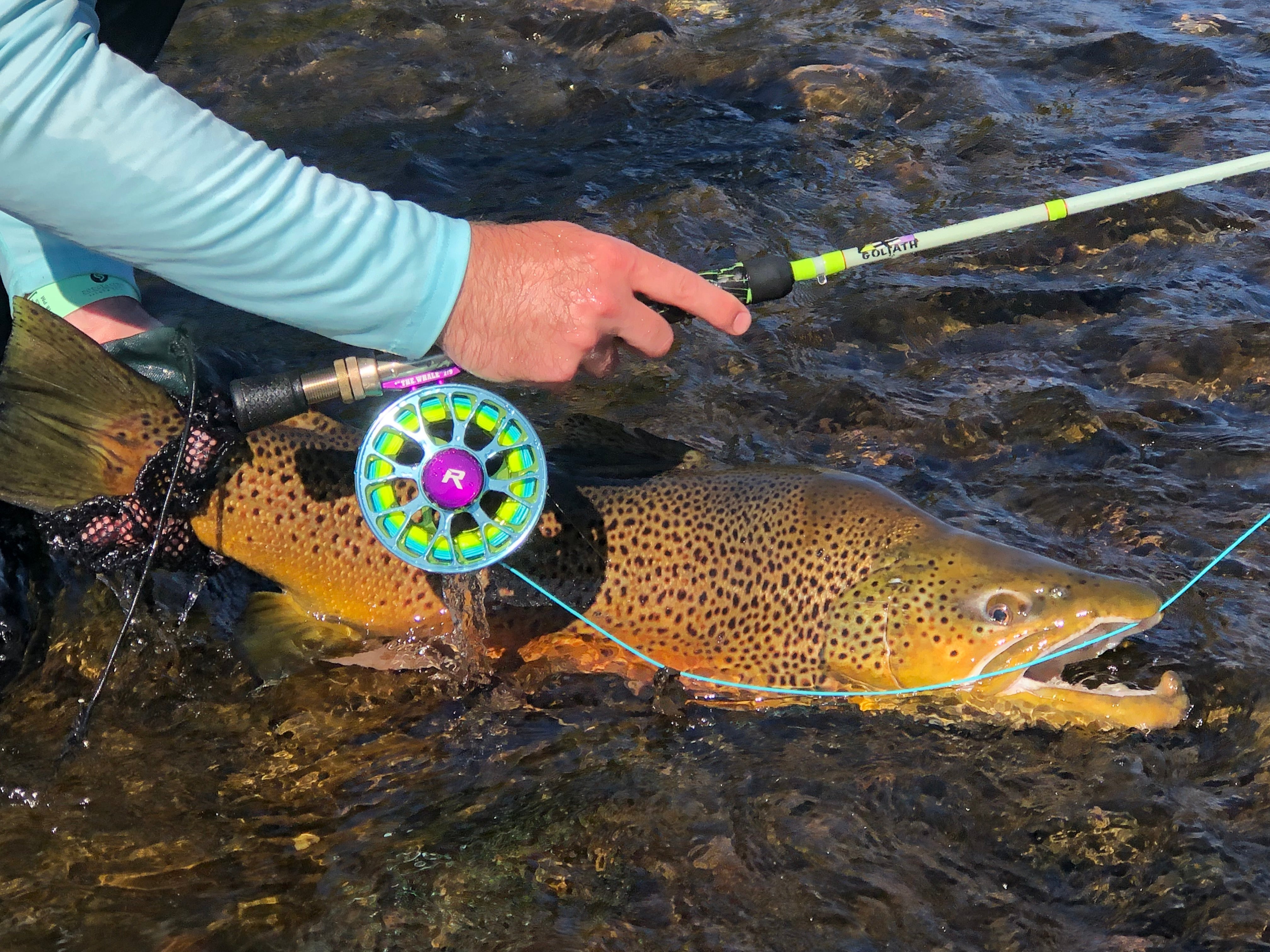
How to do it. Guide a tiring carp into shallow, weedy water where it can't stay upright, then slide a hand under its belly and cradle it behind the gills with the pectoral fins braced against your fingers. Carry a landing net sized for big fish, tucked into your waders. Scoop the carp and let it settle the last of the fight in the net.
Carp Flies and Gear That Actually Work
TIP 10 · CARP PREP
Read up on carp behavior before your first trip, not after
— Nic Hall, Denver urban carp fly fishing guide · Urban Fishing in Denver for Trout and Carp but Applicable in Any City, S6E229
I would say number one, go read the book Carp on the Fly, because I started carping before I read it and was doing a lot wrong, and I got really frustrated. If you think you're going to throw an indicator and a squirmy worm and drift it through a seam, you'll probably just snag them instead of getting an eat.
Why it matters. Carp presentation has nothing in common with a trout drift, and anglers with a standard indicator mindset spend the day snagging fish instead of hooking them. That's the frustrating first outing that makes people give up on carp.
How to do it. Before your first trip, read a dedicated carp resource — this guest pointed to the book Carp on the Fly — to learn how carp feed, move and spook. Watch drag-and-drop presentation videos so you can picture casting across a carp's back, not head-on. Find local carp anglers online, ask questions, and book a day with a carp guide if one's nearby.
TIP 11 · FLY TYING
Trim the bottom hackle on carp flies so they sit tripod-style
— Eric Leininger, Pacific Northwest carp fly fishing guide near Portland, Oregon · Fly Fishing Insider Podcast
One pro tip: flip the finished fly upside down and cut the hackle off the bottom, right against the bead-chain eyes — otherwise it'll tip the fly on its side as it flutters down. Trimmed like that, it sits like a tripod with the tail sticking straight up.
Why it matters. A carp fly that tips onto its side when it lands looks wrong to a fish already on edge, and shiny hardware can flash and blow the presentation before the carp sees the fly. A small trim keeps it sitting upright where a feeding carp is looking.
How to do it. Build the pattern on a heavy-wire scud hook with a matte black tungsten bead and bead-chain eyes — skip gold, it flashes and spooks fish. Add a chenille tail about an inch to an inch and a half long, a vinyl-ribbed body, and a few turns of soft hackle. Flip the finished fly upside down and trim the hackle beneath the eyes so it settles tripod-style.
TIP 12 · PRESENTATION
Lift and drag the fly on the surface, then drop it beside a carp
— Eric Leininger, Pacific Northwest carp fly fishing guide near Portland, Oregon · Fly Fishing Insider Podcast
As soon as it lands you have to lift your rod and drag the line, because otherwise the tungsten bead sinks too quick and the fly is so small you won't see it. Just as it passes the front of the fish you drop it, so it falls down on an angle right beside them.
Why it matters. A heavy carp fly that sinks the instant it lands disappears in murky or weedy water, so you can't steer it in front of a feeding fish. Strip it along a weedy bottom instead and you'll just foul the hook on debris.
How to do it. Cast about six inches in front of a tailing carp, or up to two feet past one feeding hard. The moment it lands, lift the rod tip and drag it toward you so the fly skates on the surface instead of sinking. As it passes the carp's head, drop the rod tip and let it sink at an angle beside the fish.
TIP 13 · CARP RIG
Build a purpose-built carp rig: 7-weight, sealed drag, fluoro leader
— Nic Hall, Denver urban carp fly fishing guide · Urban Fishing in Denver for Trout and Carp but Applicable in Any City, S6E229
I run a large-arbor reel with 150 to 200 yards of backing and a sealed drag, because urban fishing gets a lot of junk into your gear. For leader, I make my own: a six to seven foot butt section of 25-pound test looped to the fly line, blood-knotted to a three to five foot section of 20-pound fluorocarbon.
Why it matters. Standard trout gear folds against carp — they're strong, line-shy, and often fought in gritty water that jams an open drag. Matching rod length to your casting obstacles and using abrasion-resistant leader and stronger hooks cuts down on break-offs.
How to do it. Fish a 7-weight — a 9-footer by default, a 10-footer when you need reach over brush. Spool a large-arbor reel with 150 to 200 yards of backing and a sealed drag. Run a weight-forward floating line in a muted natural color, and build your own leader: 25-pound butt section blood-knotted to 20-pound fluorocarbon.
Bass and Pike: Presentation Tricks That Trigger Strikes
TIP 14 · STREAMER ACTION
Make your streamer hover and kick when you pause the strip
— Ryan Walker, Ozarks smallmouth bass fly fishing guide · Protecting and Targeting The Big Brown Trout and Bass of The Ozarks, S3E146
The hover and the kick of a fly is everything. Does it hover properly when it stops?
Why it matters. A streamer that sinks nose-down or goes dead the second you stop stripping doesn't read as a real baitfish, and that's exactly the moment a following bass decides whether to eat. Losing the hover on the pause loses the fish.
How to do it. Choose articulated streamers tied with marabou, rabbit or deer hair that flare and hold neutral buoyancy on the pause instead of dropping straight down. Fish a hard rip-strip, then a deliberate stop, and watch whether the fly hangs with a subtle kick. If a bass follows and refuses, lengthen the pause or add more articulation.
TIP 15 · SWING TECHNIQUE
Pop the rod tip mid-swing in shallow runs to trigger reaction strikes
— Joshua Boese, Twin Cities-area guide who swings flies for steelhead and other species · Fishing Within Three Hours of Minneapolis, S5E213
Pop your rod tip up four or five times as the fly is swinging through the run. It kicks the fly and brings it up slightly before it settles back down, creating a reaction bite, the same way a walleye smacks a jig when you jig it.
Why it matters. A fly swinging on a steady, predictable path can get ignored by a bass that's already looked it over. An abrupt kick reads as a fleeing baitfish and can trigger a reflex strike a plain swing never gets.
How to do it. In runs about three to four feet deep, lift the rod tip sharply four or five times as the fly swings through, letting it kick and rise before settling back. Skip this in deep holes where the fly needs to stay down. Use it as a follow-up after a run or two with nothing, and stay ready right after each pop.
TIP 16 · LINE CONTROL
Bounce and strip your line to keep streamers in the strike zone
— Alan Campbell, Michigan smallmouth bass and pike guide · Michigan Fly Fishing for Smallies and Pike, S5E243
I tell them to bounce the line, so you have to bounce your rod tip. It's not quite a jig, it's more of a pop.
Why it matters. On a sinking line with a buoyant streamer, the line pulls below the fly, and anglers either let the rig sink into structure or lose contact with the fly. Bouncing the tip and managing the slack it creates keeps the fly in the strike zone.
How to do it. Fish an intermediate sinking line with a buoyant or neutral streamer so the line sinks below the fly, not the reverse. Pop the rod tip up gently — not a hard jig — while stripping a little line to take up slack. Point the rod back down after each pop, essentially a vertical underwater mend that keeps the fly near structure.
What's the Right Gear and Technique for Smallmouth and Pike?
TIP 17 · TIPPET & LEADER
Match your tippet, leader length and depth to the day's tactic
— Jon Ray, Michigan smallmouth bass guide and Scientific Anglers product advisor · Guided EP # 15 Jon Ray. Small mouth tactics on the fly for success
For casting into structure, heavier tippet is the way to go, down to 2X or 1X. For the streamer program, I want the fly to sink and have more movement, so I'll go deeper and put on a cone head.
Why it matters. Smallmouth behavior shifts with conditions, and a single setup won't cover every day. Skip the heavier tippet near structure, the cone-head streamer for depth, or the bottom-bouncing rig, and you'll miss the tough days when bass sit on the bottom.
How to do it. Fishing structure with poppers or crawfish patterns, step up to roughly 2X or 1X tippet to pull fish from wood and rock. Running the streamer program, lengthen your leader to about nine feet and add a cone-head fly for depth. When bass won't chase, rig an indicator with a heavy fly that bounces the bottom near cover.
TIP 18 · FIGHTING FISH
Watch your first two guides, not the rod tip, to gauge pressure
— Matt Marin, Ontario pike and smallmouth bass sight-fishing guide · Pike and Spot Fishing for Bass in the Midwest, S6E227
Don't look at the tip of your rod for the pressure — instead look at your first and second guide. If you start to see bend there, you know you're loading the rod correctly.
Why it matters. Anglers who judge pressure by the rod tip alone lean the whole rod into a big C behind their shoulder, draining the leverage right when a big fish needs to be turned. Checking bend at the first two guides shows whether the butt section is actually loaded.
How to do it. When you want more pressure on a big fish, glance at the first and second guides instead of the tip. Visible bend there means the mid and butt sections are engaged; straight guides mean you're only loading the soft tip. Keep the rod angled toward the fish and don't let it collapse behind your shoulder.
TIP 19 · HOOKSET & SLACK
Eliminate slack immediately after the take to avoid losing fish
— Kip Vieth, Wildwood Float Trips guide, Mississippi River smallmouth bass specialist · Bass Fishing in the Mississippi River, S5E261
When you hook up, don't let them get to the reel — if it wants to be on the reel it'll get there, but slack is evil. No slack, because if you put slack in the system, something's going to go wrong.
Why it matters. Loose line between the rod and the fish is a leading cause of lost hookups — a moment of slack lets the hook fall free or a run snap the leader before you can react. Staying tight from strike to landing turns more grabs into fish in the net.
How to do it. The instant a fish takes, strip-set and pin the line under a finger instead of reaching straight for the reel. If slack builds while winding it on, stop reeling and grab the loose line by hand to clear it. Pair this with a heavier rod, 7 or 8 weight, and a stout leader.
TIP 20 · LINE MANAGEMENT
Build one repeatable line-management routine to stop stepping on line
— Matt Marin, Ontario pike and smallmouth bass sight-fishing guide · Pike and Spot Fishing for Bass in the Midwest, S6E227
The number one thing I see is people stepping on their own line. If you're stepping on the line you're now only getting 15 feet out when you need 50 to cover the water.
Why it matters. Stepping on your own fly line while stripping shortens your casting distance and can jam the line mid-retrieve — a real problem when a fish needs a 50-foot cast and you're only getting 15. An inconsistent stripping routine is the root cause.
How to do it. Fish in stocking feet when conditions allow so you can feel the coiled line underfoot, or run a stripping mat to keep line organized. Set one sequence and repeat it every cast: fly lands, strip to the same spot, feet planted the same way. Run that routine every time until it's muscle memory.
TIP 21 · CASTING
Fish one efficient false cast instead of chasing distance
— Kip Vieth, Wildwood Float Trips guide, Mississippi River smallmouth bass specialist · Bass Fishing in the Mississippi River, S5E261
Perfection is the enemy of good, so just be good, you don't have to be perfect. One false cast, pick it up, lay it down — you don't have to cast far for smallmouth.
Why it matters. Anglers who fuss over perfect technique or false-cast for extra distance waste time and spook fish with line hanging in the air. One well-loaded cast gets the fly working sooner and keeps the retrieve tight to where bass hold.
How to do it. Load the rod with a water haul or single back-cast, then shoot the line and let the rod do the work instead of stacking false casts. Cover a spot with one pickup-and-lay-down cast, work a short 10 to 15 foot zone, then move to the next lie. Practice shooting line for accuracy at 40 to 60 feet, not maximum distance.
TIP 22 · MINDSET
Grind out the full day since bite windows shift unpredictably
— A smallmouth bass fly fishing guide on rivers near Milwaukee, Wisconsin · Fly Fishing Insider Podcast
Would you rather have the big fish come in the first ten casts or the last ten? I'm like, last ten, a hundred percent of the time.
Why it matters. On pressured, urban rivers the daily bite window can shift by hours with no obvious pattern, so fishing a short session is gambling on guessing the window. Staying out longer improves your odds of intersecting it, whenever it lands.
How to do it. Plan trips with enough time to fish through most of the daylight hours instead of a short session, especially on rivers with unpredictable bite timing. Treat a slow stretch as normal, not a signal to quit, and keep working likely water systematically. Time on the water is the one lever you actually control.
FAQ: Warmwater Fly Fishing Questions
Do you have to figure-eight after every musky cast?
Yes. Musky often follow a fly to the boat without ever showing themselves, and the figure eight is what converts that silent follow into a strike. Guests on the Fly Fishing Insider Podcast agree the fish frequently eats on the second or third pass, not the first — skip the eight because you didn't see a follow and you're skipping the moment most strikes actually happen.
How do you know when to set the hook on a feeding carp?
Wait for the visible take, not the early signs. A carp's tail breaking the surface or its body tilting down happens before the eat, and setting then usually pulls the fly away. Watch for the mouth to open and flash bright white as it sucks the fly in — that's the moment to strip-set, using a firm pull rather than a trout-style rod lift.
What rod weight works for smallmouth bass and pike?
Guests on the show consistently point to a 7 or 8 weight for warmwater work — enough backbone to turn over articulated streamers, apply steady pressure, and eliminate slack fast after the take. Step up leader and tippet strength near structure, and run leaders around nine feet when fishing the streamer program for extra depth.
When is the best time to book a musky trip?
Book around the new moon when you can — three or four days before through a couple days after is the window one Minnesota musky guide favors on the show. Pair that with unstable or cooling weather rather than a calm, sunny stretch, since a cold front is what actually triggers musky to feed hard before winter sets in.
Get set up for it
Tie on flies built for warmwater work — musky bucktails, carp scuds and bass streamers like the ones in the tips above. Use code INSIDER10 for 10% off orders over $50.
Shop NowGo on a fly fishing trip you'll never forget
We partnered with Frontiers Travel to put you on water that's worth the flight. Tell them where you want to go. Don't wait.
Book a TripFly Fishing Insider Podcast has a referral partnership with Frontiers International Travel. If you book after being introduced through us, we may receive compensation at no additional cost to you.